
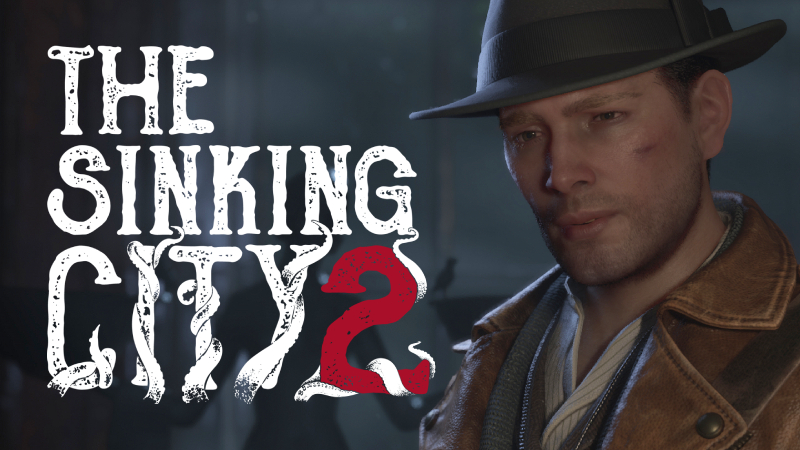
 When The Sinking City was released in 2019, it quickly became one of my favorite Lovecraft-inspired horror games, and it established Frogwares as a developer worth watching. Along with 2018’s Call of Cthulhu, The Sinking City stands out as an exceptional semi-open-world horror game set in the twisted and cosmically damned universe created by H.P. Lovecraft.
After three years of development amidst the unimaginable challenges of war-torn Ukraine, Frogwares has delivered the much-anticipated sequel. But is it a quality successor, and does it live up to the hype?
 The Great Bold Ones
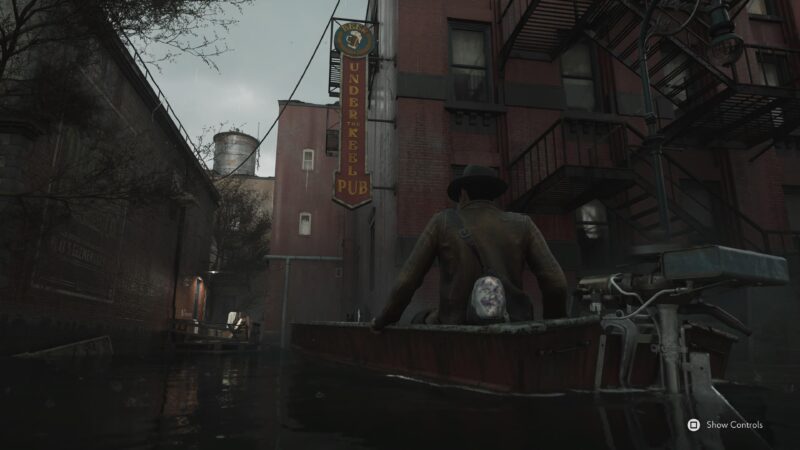
When it was announced that The Sinking City was getting a sequel, I was somewhat skeptical simply based on the fact that players would be returning to another, well, sinking city. How would that work? But then I found out it would be set in the legend-haunted, witch-cursed town of Arkham, which was a very compelling prospect. Plus, developer Frogwares said the sequel would shift its gameplay style from a semi-open world horror adventure to a full-on survival horror experience. Hearing that, especially after Alan Wake 2 pulled off a similar genre shift so well, got me fully on board; I was fully supportive of the project and immediately backed it on Kickstarter.
Now, after having completed the sequel, I can say that this new approach is largely successful. The Sinking City 2 is way more linear, ditching the extensive exploration and character interactions for a more streamlined survival horror experience. Even though it’s still set in another flooded location within Lovecraft’s mythos, it feels different from the original in a lot of ways.
The Statement of Calvin Rafferty
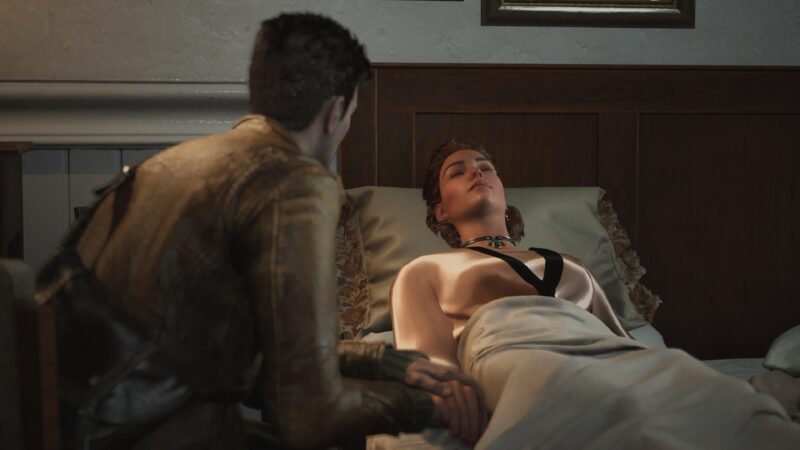
Instead of assuming the role of a private investigator unraveling the mystery of a town’s epidemic of madness, this time players take on the role of Calvin Rafferty, a man in search of cosmic secrets, accompanied by his partner in both the occult and love, Faye Bennett. As is often the case in Lovecraftian stories, the star-crossed lovers delve too deeply into forbidden knowledge, which causes Faye’s spirit to become separated from her body. This incident sends Calvin on a dark quest to retrieve her spirit and to solve the mystery of Arkham’s supernatural flood.
Andrew Wheildon-Dennis as Calvin Rafferty and Gemma Whelan as Faye Bennett deliver strong, convincing performances that bring to life an intricate and well-written story. As players dive into Arkham and its neighboring areas, they’ll encounter plenty of twists and turns while uncovering the secrets behind the slither and where they came from. Although the narrative is not as expansive or compelling as the first game, the love story between Calvin and Faye serves as a great hook, keeping players motivated to push through to the conclusion of the story.
The Mechanics of Madness
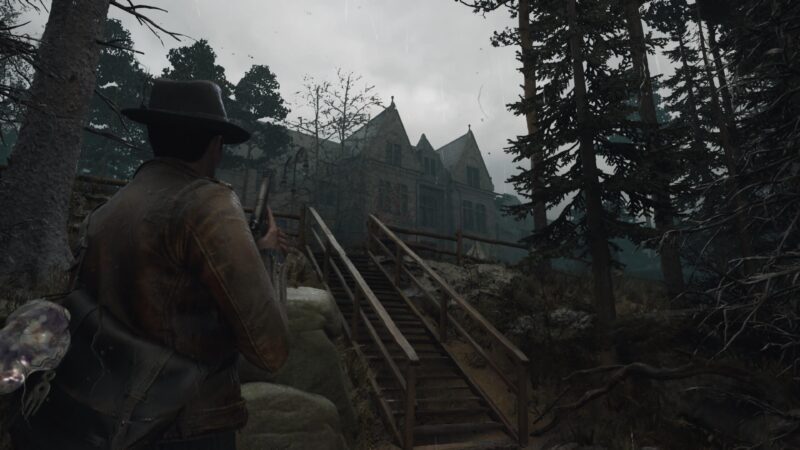
Even though the genre has changed to survival horror, The Sinking City 2 retains its semi-open world structure, albeit greatly pared down from the first game. While some environments and locales are brimming with detail and character, there are a lot less of them, with Arkham’s map dramatically condensed compared to Oakmont’s sprawling cityscape.
Similar to the latest modern horror titles, The Sinking City 2 offers players options in both combat and puzzle difficulty. I played on the “Hard Night” combat difficulty (for seasoned players seeking a challenge) and “Brainy” investigation difficulty. In the past, I’ve mostly played horror games on the regular difficulty setting, but as I get older, I want a little more challenge, so I’ve been playing games like the Silent Hill 2 remake and Silent Hill f on hard. Playing TSC2 on hard was kicking my ass early on, to the point where I thought I might have to increase the difficulty. However, as I acquired more ammo, upgraded my abilities, and added more inventory slots, things became a bit more manageable, but still challenging.
I quickly learned to take advantage of the dodge mechanic and time my gunshots carefully, since Calvin doesn’t move (or aim) terribly fast. Weapons can be assigned to the d-pad for quick access, and players can upgrade their abilities, manage their inventory, and save their progress at specially designated “safe zones”, similar to the saferooms found in Resident Evil games. These ethereal spaces resemble Calvin and Faye’s ornately adored apartment and serve as a dimensional connection between the real world and their intimate home. On-the-fly crafting returns, which greatly streamline resource management and combat.
The Things on the Doorstep
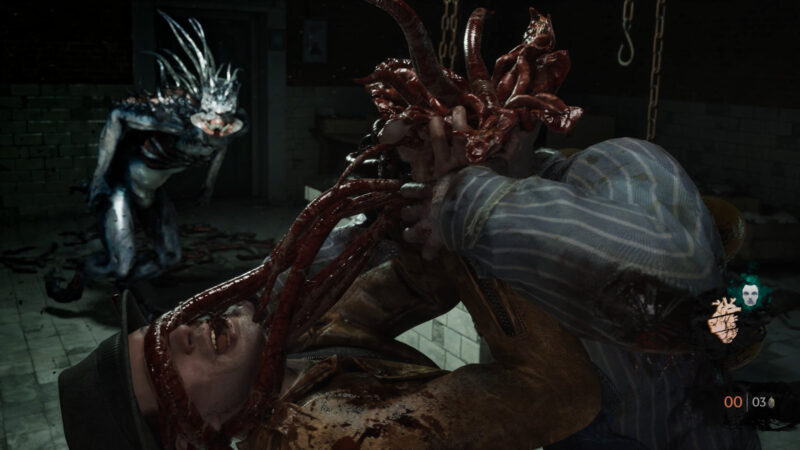
One aspect I was initially skeptical about was the game’s main enemy, The Slither. After seeing them in early trailers, I doubted that a small, worm-like enemy would be very compelling, nor did I find the mechanic of having them reanimate corpses particularly interesting. However, I was pleasantly surprised by their effectiveness in both appearance and function. They writhe around en masse in virtually every area you explore is unnerving, and I felt compelled to stomp on as many of them as possible. It was also quite creepy that every time you encountered a corpse, you never knew if a Slither would suddenly squirm its way into an orifice to reanimate it. This unpredictability created many tense and anxiety-inducing moments while exploring new locations.
The enemies in the game are grotesque, well-designed, and genuinely creepy. The first one you encounter is the Stygian Harvester, a lightning-fast creature with large, pale claws and a wide mouth. Its initial appearance is suspenseful as it darts in and out of your view, creating a tense atmosphere. These enemies are aggressive and often attack in groups, their rapid, insect-like movements adding to the unsettling experience. This unsettling feeling extends to all the monsters in the game; they manage to get under your skin in a way that few other horror game enemies can. Each new reveal is terrifying, and I found myself dreading them (in a good way).
The spooky atmosphere and tense encounters with enemies also carry over into The Holloway Manor DLC, a stand-alone case recommended for players who have completed the main game.
The Lurking Flaws
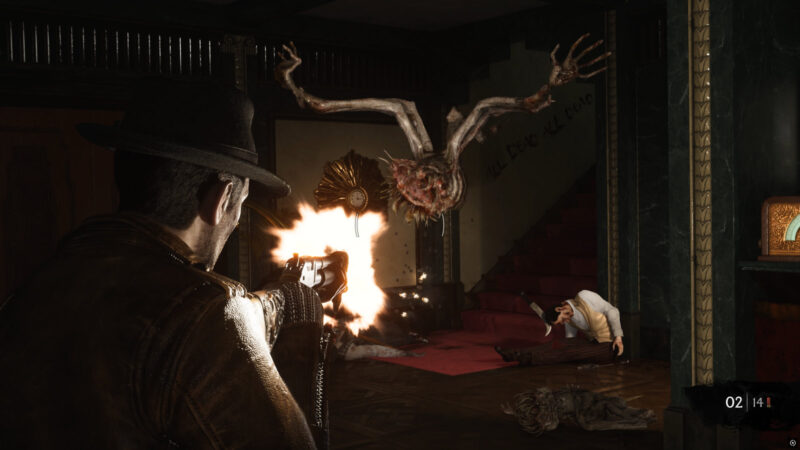
There are a few minor yet noticeable flaws in the game. The delay in Calvin’s weapon reloads can be quite frustrating; I often had to initiate the reload multiple times before my selected weapon was fully loaded. This seems like something that could easily be addressed in an update.
Another minor issue I encountered was the excessive presence of regenerating item boxes during boss battles and gauntlets filled with hordes of enemies. While the game offers a clever in-universe explanation for this, it feels like a temporary fix for running out of health and ammo, which could have been handled more gracefully. Additionally, many of the larger boss enemies are reused throughout the game, diminishing their impact and making encounters with them feel less special. Luckily, these issues are relatively minor and do not significantly detract from the overall gaming experience.
The Graphics & Sound of Erich Zann
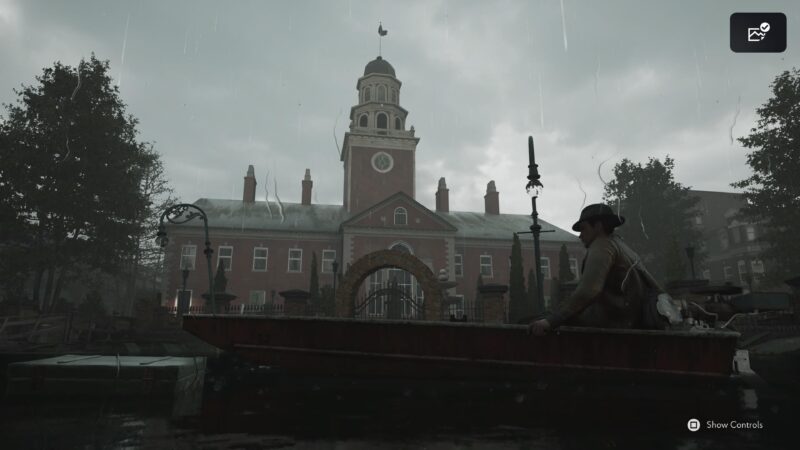
Powered by Unreal Engine 5, The Sinking City 2 dazzles at every turn. I played the game on a standard PS5 in Performance mode, and everything ran smoothly. I didn’t notice any significant loss of quality or frame drops. The city feels soaked to its bones, neon lights shimmering in puddles on rain-soaked cobblestones, while monsters look appropriately slick and grimy. Arkham itself is a labyrinth of detail and atmosphere, brimming with diverse architecture and character models bursting with personality, from the memorable main cast to the twisted, grotesque denizens you meet along the way.
The game’s sound design is just as impressive, creating an atmosphere that draws you in. I experienced it using my PS5 PULSE Elite Wireless Headset, and the range of sounds was remarkable. You can hear sloshy footsteps, old wood creaking under sagging buildings, and distant screams from both humans and monsters. Each of these elements highlights the game’s impressive sound design.
Final Thoughts
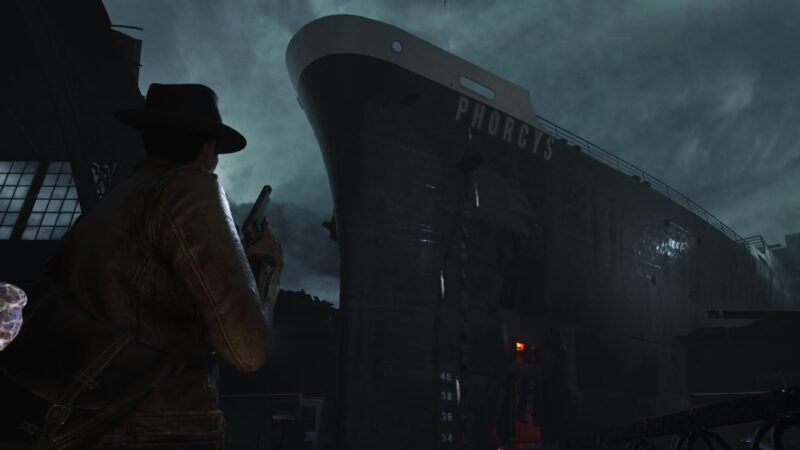
The Sinking City 2 is an excellent game overall. I completed it in about 14 hours on the Hard Night and Brainy difficulty levels. Even though I expected it to be a bit longer, it was still very well executed, demonstrating that smaller developers like Frogwares can deliver AAA-quality games. Standout performances from both leads, along with dynamic and polished gameplay (though not perfectly optimized), elevate the game above the majority of simplistic offerings typically found in modern survival horror.
The game is more linear than the first installment, which actually works to its advantage and keeps it from feeling like a repeat of the original. Despite some minor issues I had with repetition and certain gameplay elements, this sequel is a quality follow-up that deserves your attention. Any fan of survival horror, especially Lovecraft-inspired horror, should definitely pick it up.
Beyond my thoughts on the game itself, The Sinking City 2 is a remarkable achievement in game development, especially considering that the developers created it during the war in Ukraine. I would like to extend my gratitude to each member of the Frogwares development team, including their PR staff, for their incredible work.
 (8 / 10)
Great
 (8 / 10)
Rely on Horror Review Score Guide
A PS5 review code was provided by the publisher.