
 IDOLxISxDEAD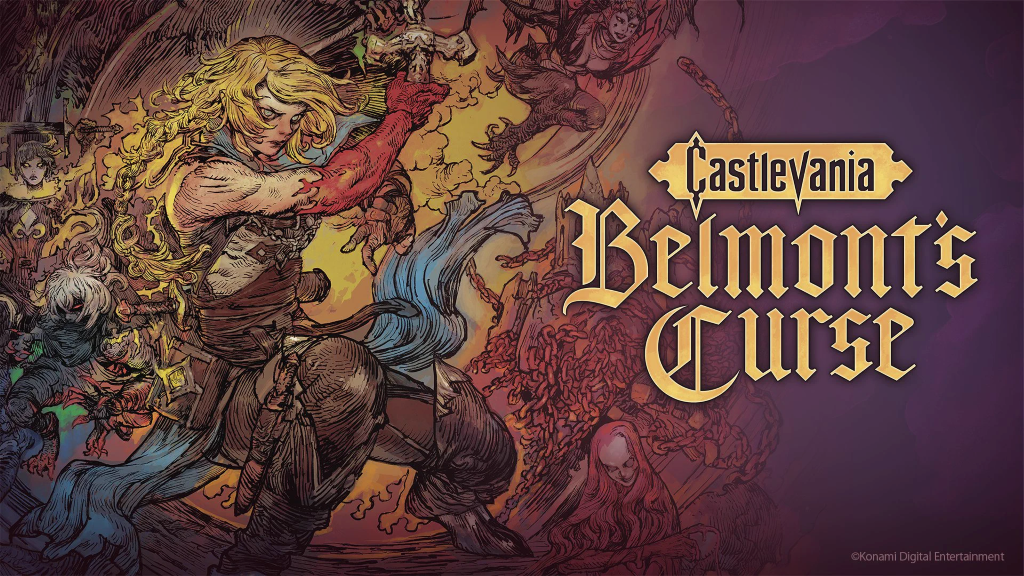
After a thirteen year hiatus, a new 2D Castlevania game has finally been unleashed on the world. Castlevania: Belmont’s Curse is the latest entry in Konami’s long running gothic action horror series, co-developed by Motion Twin and Evil Empire, the teams behind 2018’s Dead Cells and its massive Castlevania DLC from 2023. Since the last 2D release, several collections and remasters of previous games in the series have been released, as well as the hugely popular Netflix anime series (2017) introducing a whole new generation to the characters and world of the games.
After what’s seems like a vampire’s lifetime since the last great title, many fans were skeptical of the newest entry, and wondered if it would be a return to the series’ classic gameplay and exploration elements. After exploring everything the game has to offer, I can confidently attest to the quality and care that’s been put into this comeback.
Narrative
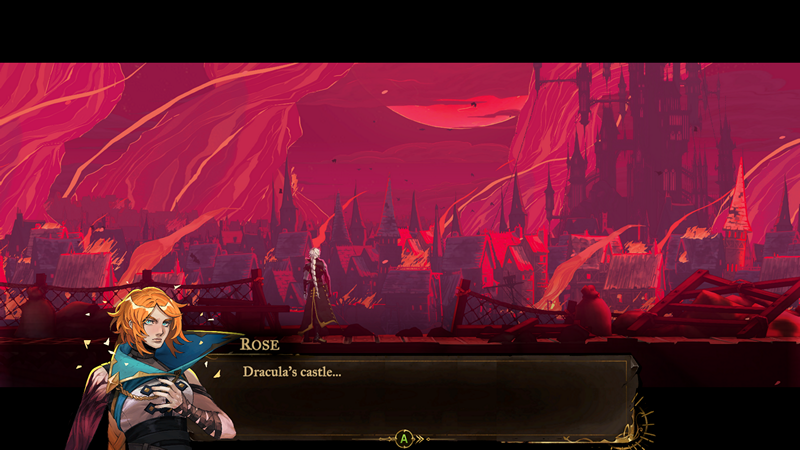
While the Castlevania series has never been particularly known for its narratives (due to its origins as an action-focused 8-bit series), Belmont’s Curse seems to take inspiration more from the animated series than the previous games, telling a focused story about Rose Belmont, the daughter of Trevor, who slayed Dracula in Castlevania III (1990). Almost all of the dialogue in the game is voiced (another big change for the 2D entries in the series), and goes a long way to add some personality to the characters. While the English dub wasn’t particularly great during my first few hours of play, the Japanese dub that I switched to later was very professional and well-delivered, adding depth and impact to the story.
The story has a number of emotional beats about Rose and her relationship with her father and mother (Sypha, also from Castlevania III,) along with some appearances from other Belmonts, plus a lot of interesting elements of French history and mythology mixed in, since the game takes place in medieval France. There’s a pretty satisfying character arc for Rose, including some themes about mental health, friendship, family, and a few other resonant topics that felt handled well, with a sense of clarity that hasn’t really been seen in the series’ game narratives before.
Gameplay
I have to admit that when I first heard that the Dead Cells teams were taking over the development on this game, I had my reservations. While I enjoyed Dead Cells quite a bit, many elements of its gameplay didn’t feel like an exact match for Castlevania’s history and pedigree. However, shortly after starting the journey with Belmont’s Curse when I first played it at PAX West last month, most of those fears were eliminated, and the game nearly instantly felt like a natural evolution of the classic 2D gameplay that the series was known for.
The game does not adapt any of Dead Cells‘ roguelike elements, nor is the combat quite as frantic as DC‘s can get at times; it manages to find a great balance between the new and old combat elements. Especially after obtaining the whip swing ability, the combat and traversal take on whole new dimensions, and the combat becomes more fluid and visceral than the series has ever been before. The whip swing can be used to swing from various grapple points to reach new areas (much like Castlevania IV,) but it can also be used in combat to help you lock onto enemies and pull yourself towards them, allowing you to close distance very quickly and also unleash a devastating attack on the way over.
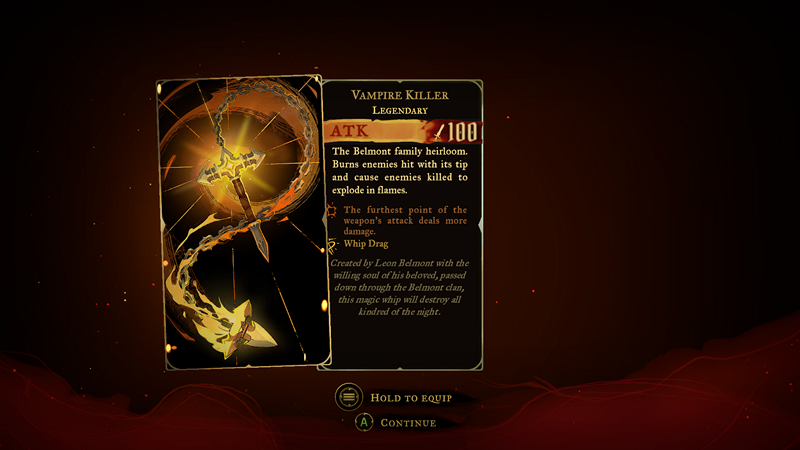
Much like the later exploration-based 2D entries in the series, you’ll have several types of weapons to use, including various kinds of swords, whips, spears, and more, each with their own different kinds of attacks or mechanics, allowing adjustment for your preferred play style to a degree. While it doesn’t have hundreds of weapons to find like many of the previous 2D games did, there’s four in each main class, which serves to not over-complicate the systems or cause too much over-analyzation of equipment strategies, which is a good thing. There’s also some unlockable relics hidden throughout the game that let you change some stats and gain more passive abilities by equipping them, which can also factor into your equipment strategy.
Each weapon class feels useful and strategic in its own way, with all of them serving a certain purpose and advantage over certain enemies, but none of them feel particularly over-powered as an all-rounder weapon that would replace all the others, striking a good balance between all the choices. Speaking of balancing, the difficulty feels very appropriate throughout, while a little bit on the challenging side overall, keeping you on your toes and learning to use new abilities as you unlock them. This includes some extra traversal moves, a parry ability, and various spells (essentially the new sub-weapons) to use in fighting your way through the hordes of enemies.
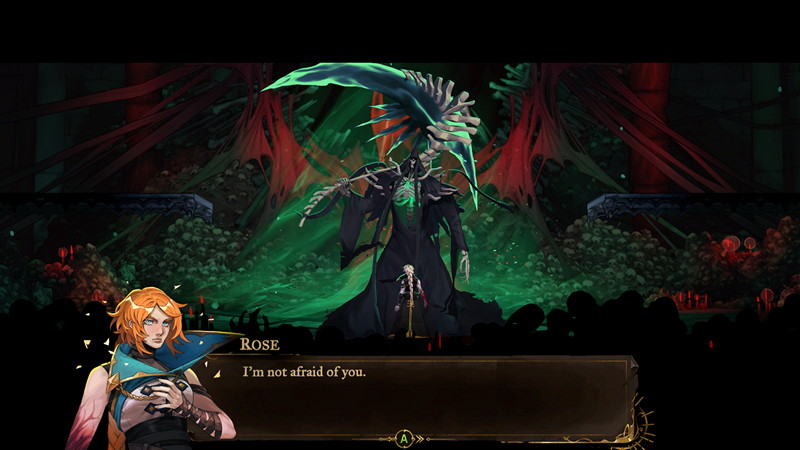
Throughout the game, you’ll encounter a vast majority of the series’ most popular enemies, including a few classic bosses here and there. There’s a variety of new ones mixed in as well, similar to how most of the 2D entries have handled their enemy lineups. It felt great to consistently be recognizing all the returning enemies, but also marveling at the aesthetics and combat abilities of the new ones, which are mostly all very well-designed. Each enemy has specific timing and attacks you’ll need to learn to dodge and circumvent, and the bosses can have some occasionally tricky patterns, as well.
The progression and map are very consistently designed and feel mostly quite well-paced, usually providing just enough of a hint to point you in the general direction of where you should be looking for your next bout of progress without just throwing up a map marker for you. There’s only a few small exceptions to this, but none of them particularly drag down the pacing or flow of the game much, and it hits a level of immersion and compulsion to explore everything that’s rarely felt to such a strong degree in these types of games.
It was a little confusing that the game waits so long to start giving you extra non-whip traversal options, where most of the previous games in the series started providing things like air dashes and double jumps much earlier by comparison. This caused a bit of admitted impatience at a certain point on my part, but it does make obtaining these things later in the game feel fairly rewarding as a result.
Art Direction
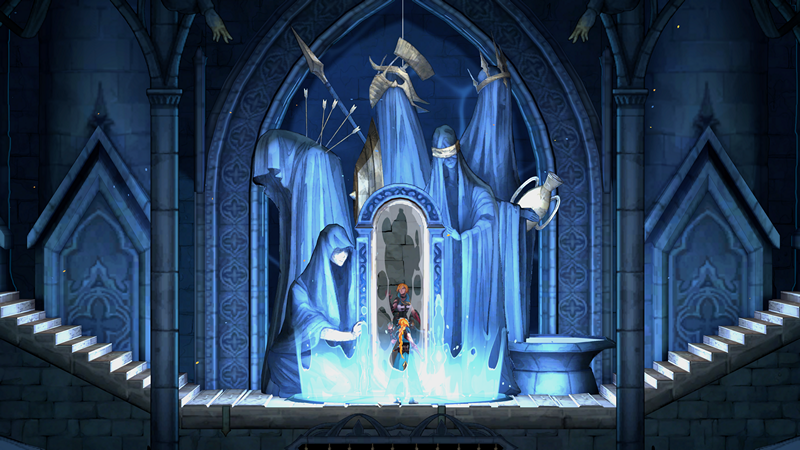
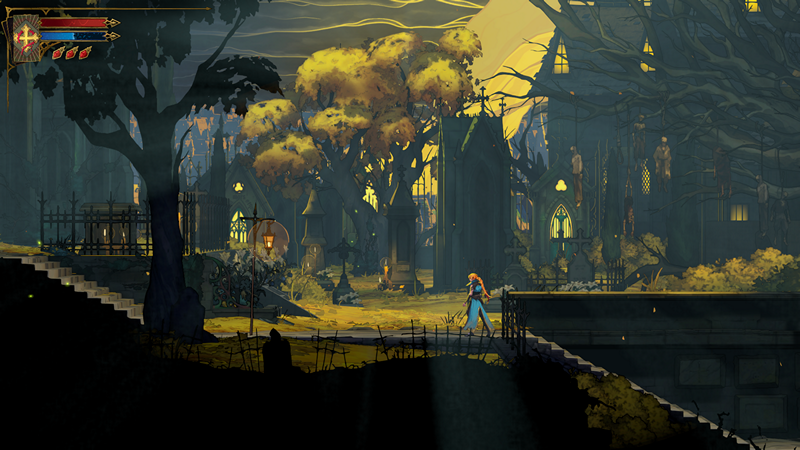
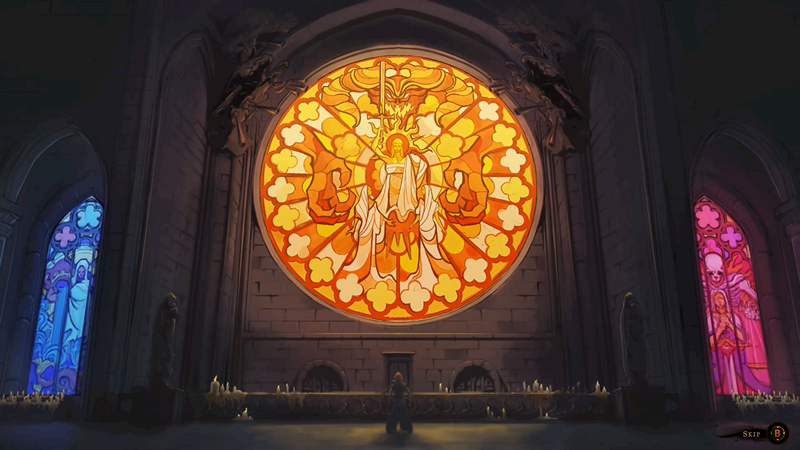
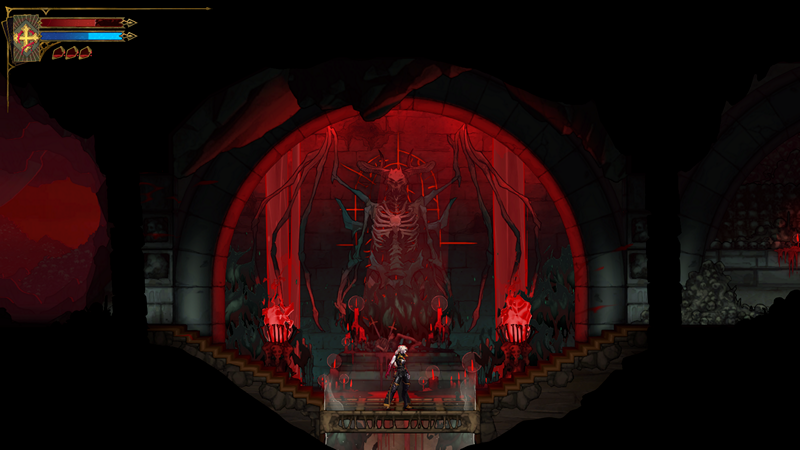
All through its run-time, Belmont’s Curse‘s art was consistently impressive, with some gorgeous hand-drawn art that brings to life the characters and environments, with every inch of the menus and map feeling alive with a satisfying style. While the 3D models of the characters and enemies aren’t particularly impressive (similar to Bloodstained: Ritual of the Night‘s 3D models,) the way that the 2D textures mix with the 3D models still gives it a distinctive look that serves the gameplay perfectly well.
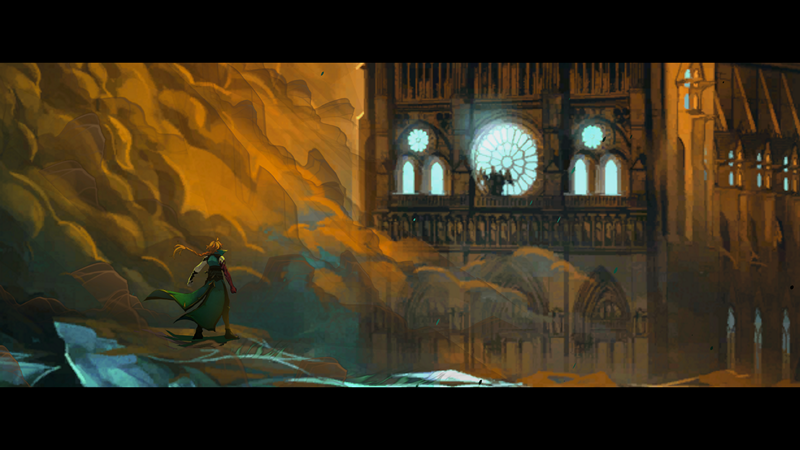
When it comes to the strictly-2D art, every meticulously-detailed tarot card, character portrait, and background feature comes to life vibrantly with colorful visuals, and the 3D art consistently features beautiful, flowing animations in a way that’s always exciting to see and makes you forget that the 3D models aren’t all that impressive from a technical standpoint. There’s also animated cutscenes at certain points for story exposition, and they’re animated quite well, feeling like a more refined and stronger version of the visual style of the animated Castlevania show.
While the overall art direction isn’t the most innovative or technically impressive, it’s very well-done and is several steps above something like Dead Cells and many other modern Metroidvania games, often having an aesthetic feeling similar to something like Castlevania: Mirror of Fate, which I enjoyed the look of quite a bit.
Since it’s technically part of the aesthetic direction, the general audio design in the game is done quite well, with the sound effects of traversal and combat both feeling very in line with the series history, featuring impactful hits, snappy whip cracks, and aural cues for most jumps and movements. Unfortunately, one of the most disappointing parts of the entire package here would have to be the musical score, which generally never even came close to reaching the driving, classically-inspired power that the Castlevania series is so well-known for in its soundtracks.
While this certainly doesn’t ruin the game by any stretch, one can’t help but feel like something is missing when playing such a great Castlevania-style game and not hearing some catchy, motivating soundtracks guiding you through it all. Even when the game brings back a few classic songs later in the game, they’re remixed or rearranged in a way that strips most of their power away by adding dissonant, modern electronic sounds into the classic compositions, and it just doesn’t fit the series very well.
Performance/Controls
On the performance front, the game ran very well across the PC and Xbox Series platforms, with very few glitches or bugs that were ever noticeable, making the overall presentation very solid, especially for a pre-release build. Even on various different PC type devices (including a handheld PC and laptop), just by changing a few simple visual settings, the game had no trouble hitting solid framerates for the action.
As for the controls, they feel extremely snappy, especially for the fairly expanded move set that the game features compared to most of the previous titles in the series. As long as you’re getting solid framerates, I found no control issues. It is highly recommended to play with a D-pad rather than an analog stick, given how many insanely precise platforming segments you’ll have to traverse, but this might be more of a personal choice, given the series’ history of control schemes.
Final thoughts
Belmont’s Curse is easily one of the most enjoyable titles in the Castlevania series, even edging out a few of the GBA and DS titles in my humble opinion. The inclusion of updated movement and combat systems make the whole experience a joy to play, as well as some actual story to sink your teeth into and some puzzles to keep you guessing. Despite its soundtrack being a little bit of a letdown, nearly every other aspect of the game is well-polished, making for a welcome addition to the franchise and a joyous celebration of the series’ 40th Anniversary.
Especially at its reasonable price, the 15-20 hours it’ll take to get the Normal ending is a journey well worth taking, and it signals a rebirth of what many of us consider among the most legendary action-horror series of all time. Any fans of the 2D ‘Vanias should absolutely check this out. We can only hope that the series will continue from here, with more fresh takes and ideas from other developers in the future.
 (9 / 10)
Amazing
(9 / 10)Rely on Horror Review Score Guide
(A review code was provided by the publisher for the Xbox/PC platforms)