

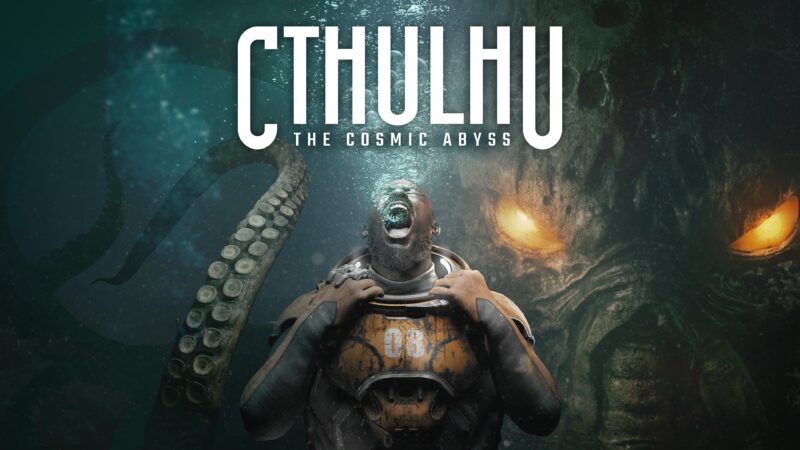
We at Rely recently had the opportunity to interview Nicolas Garcia, the composer for Cthulhu: The Cosmic Abyss. At the time of this interview, he informed us he was in Croatia for the Crystal Pine Award, where the game won the award for Best Original Score – Video Game, competing against titles such as Hades 2, Ghost of Yotei, and Sword of the Sea. Congratulations to Nicolas! Our interview assisted us in understanding his thought process and precisely what led to the game winning the accolade.
ROH: The oppressive atmosphere in Cthulhu: The Cosmic Abyss feels deeply intertwined with its soundscape, almost as if the audio itself is actively working against the player’s sense of comfort. When you first approached the project, what was your guiding philosophy for creating that slow-burning unease?
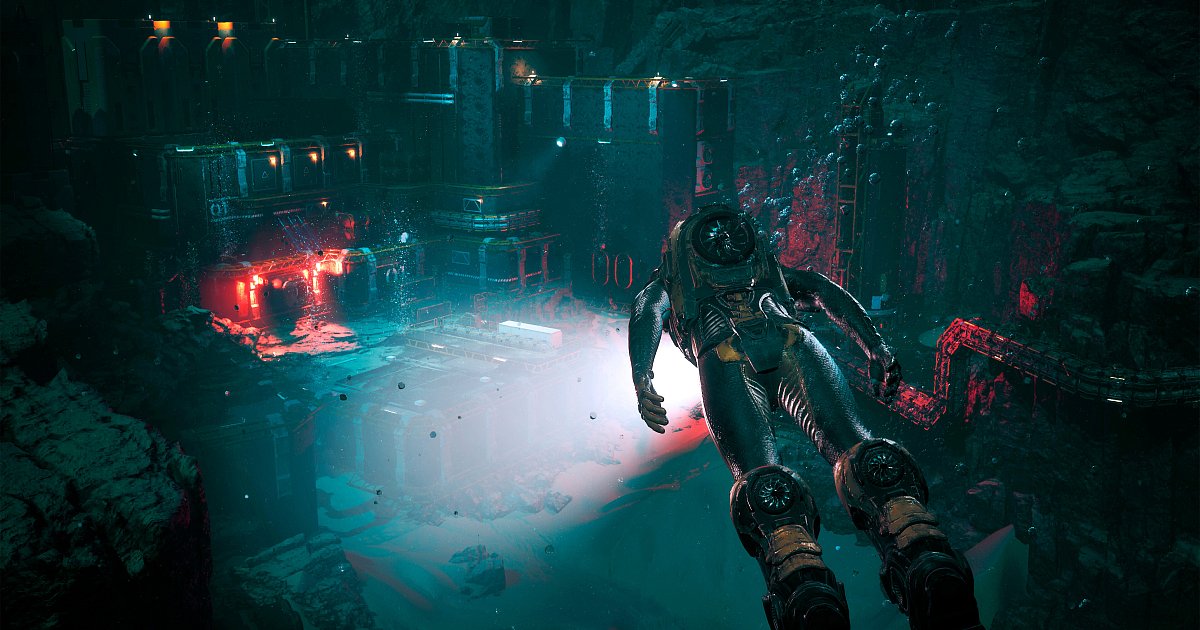
At the start of the project, we had quite a few meetings with Dorian Pfister (Audio Director) to calibrate the atmosphere as precisely as possible. If the music is too uncomfortable, players might turn the volume down, and conversely, if we didn’t push far enough into discomfort, we ended up with music that didn’t serve its purpose. I therefore worked on several fronts at once: ambiguous harmonies, long and floating dissonances to surround the player and reflect what one might feel within the Abyss, as well as synthetic sounds created through resynthesis, rougher, more unstable. We also established sonic “codes” tied to specific themes and chapters, to build a gradual and coherent descent into the abyss, chapter by chapter.
ROH: One of the most fascinating details you revealed about the game’s production was the use of a submerged field recorder inside a sealed water barrel for underwater sequences. Can you walk us through how that idea came about, and what those recordings added sonically that traditional digital effects could not?
The idea came while watching a gameplay sequence from chapter 2. I thought aquatic percussive sounds could be interesting, and I remembered a barrel in my garden I had used for a cement mixer. I started experimenting: multiple recording sessions, varying water levels, a portable recorder sealed inside a waterproof box, which was a bit nerve-wracking, as I really didn’t want to damage it, and two microphones placed on the outside. Once the setup was ready, I tested all kinds of objects to strike, rub, and scrape the barrel at different spots. I really love that kind of sonic exploration, getting my hands dirty. There are probably commercial libraries that could have offered something similar, but what matters to me is having a unique sonic palette created specifically for the game. That raw quality of the recording genuinely contributes to the atmosphere, rather than using a sound anyone can access.
ROH: Cosmic horror often relies on the fear of the unknowable, which can be difficult to translate into music without becoming overwhelming or melodramatic. How did you balance restraint and escalation throughout the score?
Restraint was the key from the very beginning. Leaning too hard on dissonance or orchestral swells tips you into melodrama, which breaks exactly the effect you’re after. I worked in very gradual, almost imperceptible layers, so the player wouldn’t quite know when the discomfort had set in. This descent is also reflected in the orchestration itself: in the opening chapter and the game’s intro, the textures are largely carried by the orchestra, something more organic. Then, progressively, the synthesizers take over, leading to pieces like Join Us, which are quite intense and overwhelming. Lovecraftian cosmic horror is above all about what cannot be seen, what cannot be understood, and the music had to reflect that: suggest rather than assert. The harmonies often remain suspended, unresolved, as if the player were sinking into something irreversible.
ROH: The use of the carnyx as a recurring subliminal element is such an unusual and inspired choice. What drew you to that specific instrument, and how did you integrate something so ancient into a modern psychological horror soundscape without it feeling overt or distracting?
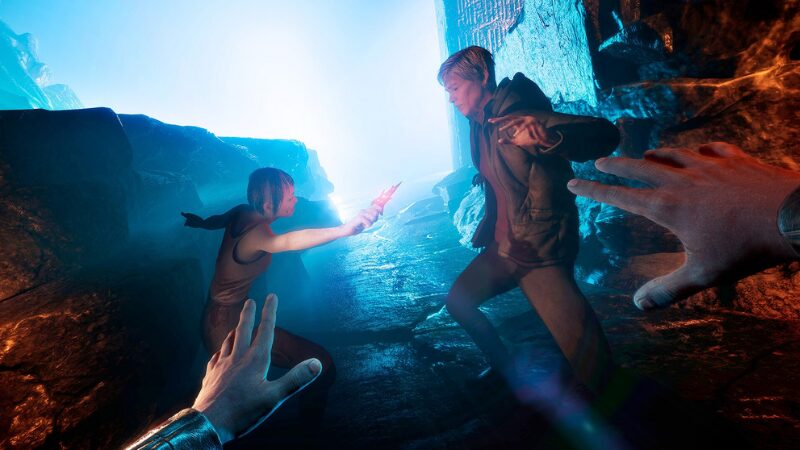
I was looking for an instrument capable of conveying something both ancient and original. After a lot of research, I came across the carnyx, and I was lucky: there was a carnyx maker and player just two and a half hours from me, Samuel Méric. I had played The Call of Cthulhu tabletop roleplaying game as a teenager, and I wanted to create a kind of recurring call throughout the score, the call of Cthulhu, in a sense. It is an instrument that is both ancient and limited: without valves, the player can only rely on the natural harmonic series, with a few additional semitones accessible through specific playing techniques. That constraint gives it a very singular character. In the game, it is used subtly, often in the background, from Where Are You, when Noah and Elsa are searching for Mei in the basement in chapter 1, all the way to the end. To blend it into the psychological horror soundscape, I worked on reverb and spatialization to keep it diffuse and distant, more of a decorative presence than an assertive voice.
ROH: How closely did the score and environmental sound design evolve alongside one another during development? Did you approach them as separate disciplines, or more as a unified psychological tool meant to shape the player’s emotional state?
Dorian had a clear vision of the environmental sound design from the start, which made the collaboration quite natural: either he would brief me on what the sound design would include, or the team would adapt the sound design to the music. This prevented any conflict and allowed us to build a truly crafted and immersive sonic experience. The two disciplines were conceived together, as a single unified psychological tool.
ROH: Lovecraftian horror has been adapted countless times across games and film, but The Cosmic Abyss feels particularly focused on dread rather than sudden terror. Were there any composers, films, or experimental audio works that influenced your approach to sustaining tension over long stretches of gameplay?
Alien (1979) was a major influence, and particularly Jerry Goldsmith’s score, built entirely around fear and the almost invisible, yet strangely compelling, presence of the creature aboard the ship. Just before I started composing, I had also seen Alien: Romulus (2024) with Benjamin Wallfisch’s score, which I loved, especially the atonal vocal effects. Krzysztof Penderecki also played an important role in my approach to long-held tensions and aleatoric string techniques. I would also add György Ligeti, whose micropolyphonies create that sense of infinite and threatening space that felt very right for the cosmic abyss.
ROH: Did working on Cthulhu: The Cosmic Abyss require you to experiment with any unconventional recording methods or instruments beyond the submerged recordings and the carnyx? If so, were there any discoveries that surprised even you during production?
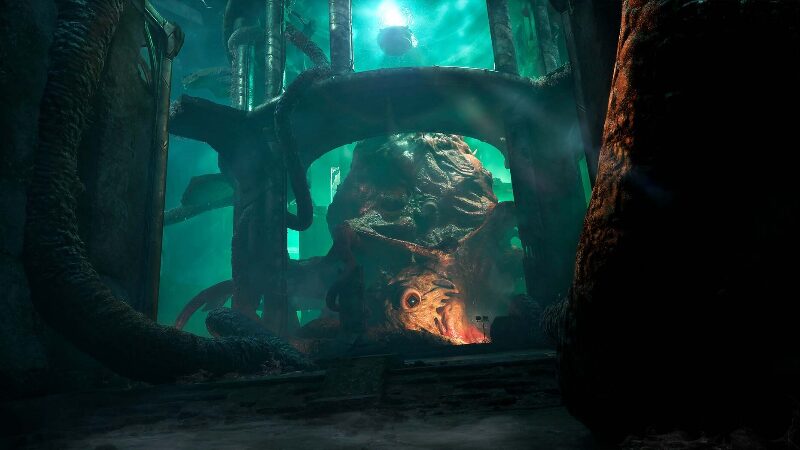
I recorded quite a few unusual instruments for this project. A citole, a medieval instrument built by French luthier Philippe Berne, who added frets and slightly rounded the nut so it could be played with a bow. I used it for the Dagon zone (Dagon’s Horror on the soundtrack), the bowed citole tracks actually disappear when you enter the bloodied water, then reappear when you resurface. I also used a guqin, a Chinese instrument normally played by plucking, which I bowed throughout the score as well. For Hydra, a zither struck with mallets, to give an archaic feel. A didgeridoo to add harmonics and power in the low end, and for R’lyeh, a gembri G3, also built by Philippe Berne.
ROH: After spending so much time constructing this kind of suffocating, psychologically invasive atmosphere, do you feel that horror games demand a fundamentally different compositional mindset compared to other genres?
Yes, profoundly. In most genres, and particularly in film music, melody tends to be the driving force, at least in my approach. It evolves, transforms, returns throughout the score as an emotional thread. Here we did the same thing, but with textures. It is the texture that shifts, thickens, descends alongside the player. There are of course melodic themes, such as the Yith themes, with passages that come closer to traditional cinematic scoring, but they remain islands within an ocean of sonic matter. In psychological horror, music must precede the emotion, instilling it before the danger is even visible, which requires accepting that you are not there to “please” in the conventional sense. This project taught me to truly trust silence, and the absence of clear melody, as an expressive tool in its own right.
We previously reviewed the game, stating, “If there is one area where Cthulhu: The Cosmic Abyss consistently excels, it is its audiovisual presentation. The game builds a dense and oppressive atmosphere that often feels more impactful than any direct threat.” Cthulhu: The Cosmic Abyss is available now on PC via Steam, PlayStation 5 and Xbox Series.