
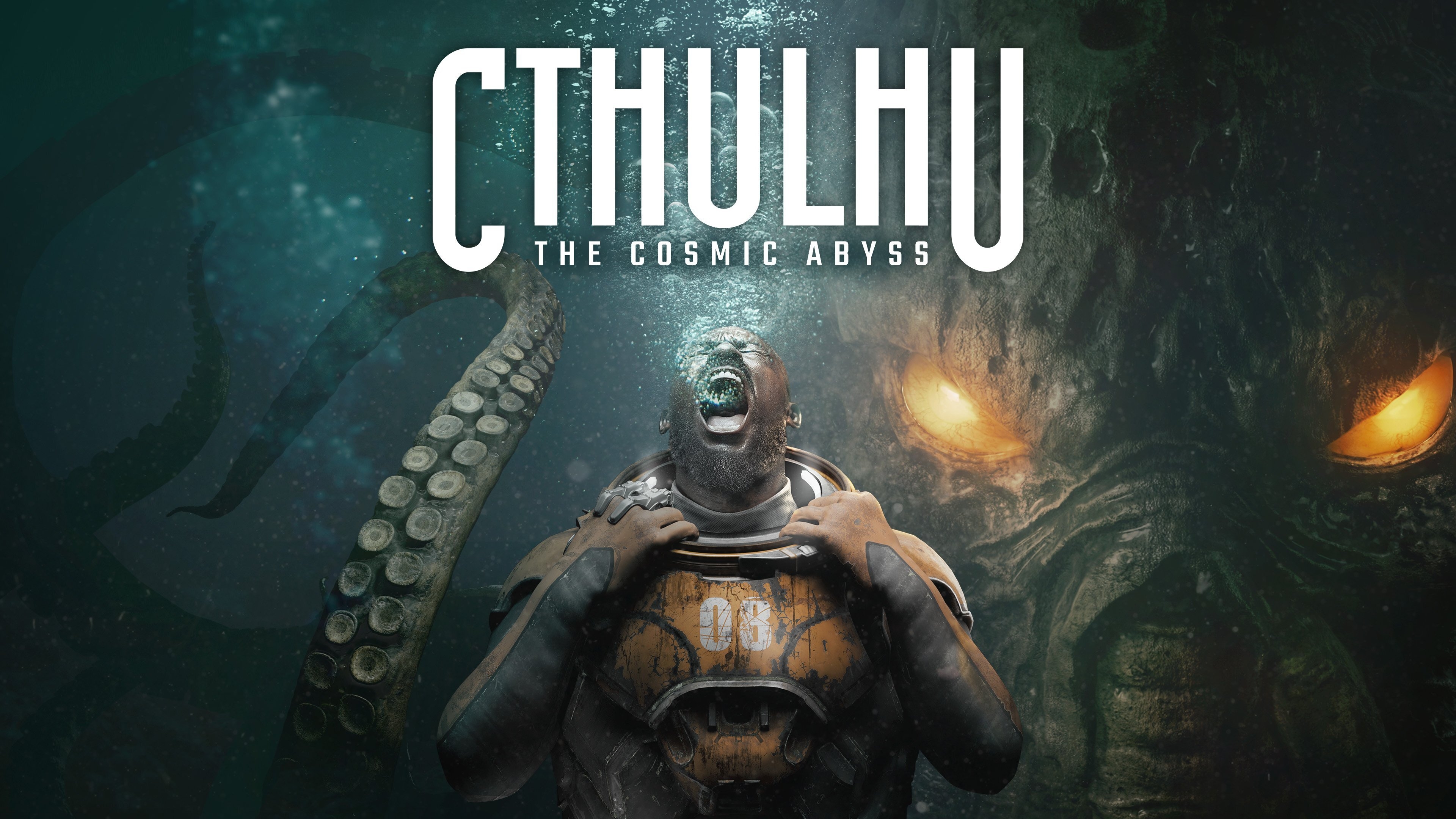
With Cthulhu: The Cosmic Abyss, developer Big Bad Wolf Studio takes on the challenging task of translating the cosmic horror of H. P. Lovecraft into an interactive experience. Instead of relying on traditional horror elements such as combat or jump scares, the game follows a noticeably slower and more atmospheric approach.
This focus shapes the entire experience. The atmosphere is primarily built through isolation, darkness, and the constant feeling of uncovering something beyond human comprehension. In doing so, The Cosmic Abyss deliberately sets itself apart from many other genre entries, while also demanding patience and attention from the player.
Story & Setting
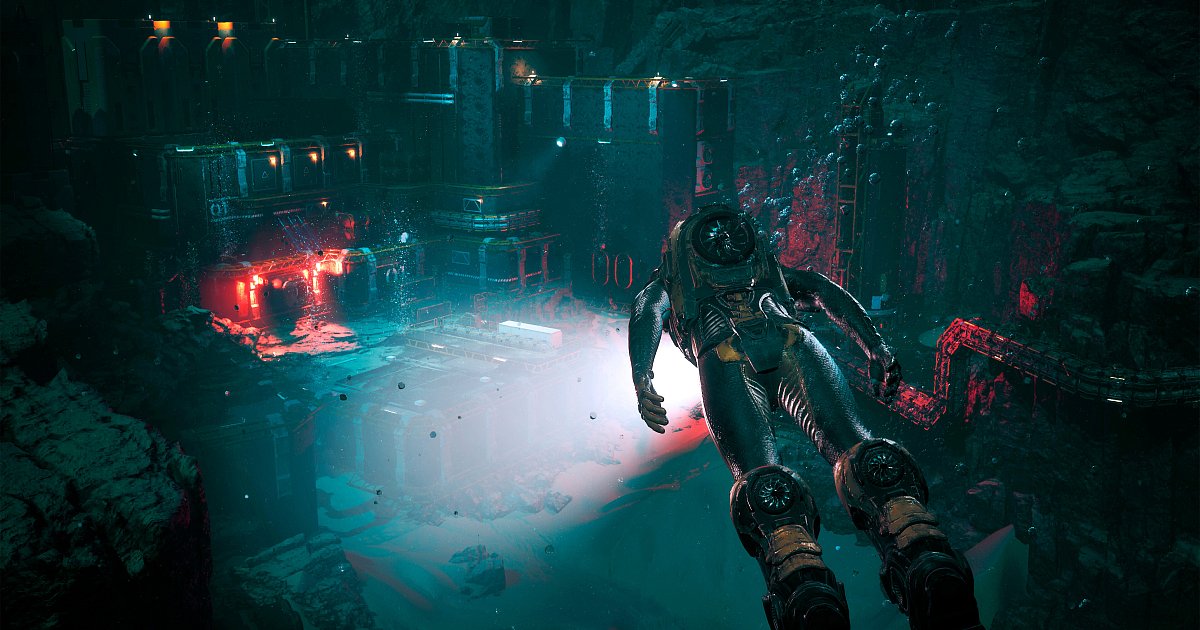
The game places players in a dark future vision of the year 2053. At its center is investigator Noah, who begins with what appears to be a conventional case, only to quickly become entangled in a conspiracy that extends far beyond human understanding. His investigation eventually leads him deep beneath the surface of the Pacific Ocean, to a remote research facility that is not only abandoned, but also marked by a disturbing past.
This setting is far more than just a backdrop. The deep sea serves as the perfect stage for cosmic horror: constant isolation amplifies the feeling of helplessness. Unlike many horror games, the threat here does not come from visible enemies, but from the environment itself and whatever might be hidden within it.
As the story progresses, Noah uncovers fragments of a much larger truth: logbooks, audio recordings, and visual clues point toward experiments, secret organizations, and eventually the legendary city of R’lyeh. Deeply rooted in the mythology of H. P. Lovecraft, it is said to be the resting place of Cthulhu, one of the “Great Old Ones.” The game handles this material carefully, often implying rather than showing, which significantly enhances its unsettling effect.
A key element of the narrative is the protagonist’s gradual mental deterioration. The deeper Noah ventures into the secrets of the facility and ancient forces, the more reality and perception begin to blur. Visions, distorted impressions, and contradictory information increasingly make the player question what is real.
The game relies heavily on indirect storytelling. Instead of long cutscenes, players must reconstruct events themselves by connecting clues and forming interpretations. This creates a strong sense of involvement, but can also lead to fragmented storytelling where important details are easily missed. Thematically, the game touches on ideas such as technological hubris and the consequences of scientific overreach, alongside its central theme of madness. However, many of these ideas remain more implied than fully explored.
Gameplay – Investigator Instead of Fighter
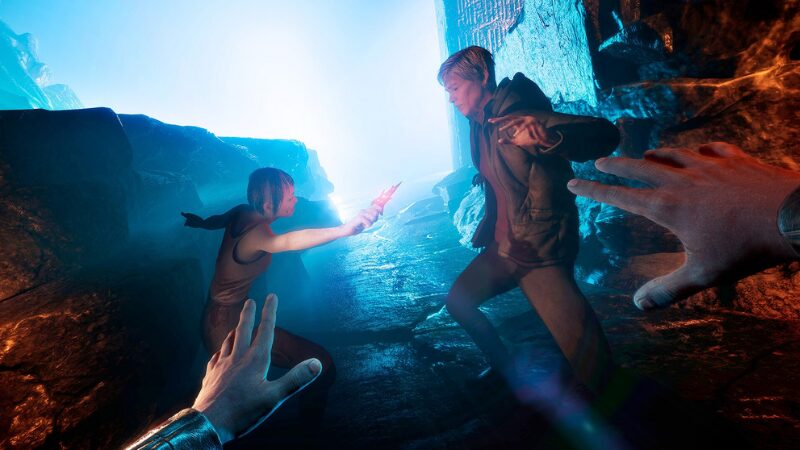
Cthulhu: The Cosmic Abyss follows a very clear gameplay philosophy: analysis over confrontation. Big Bad Wolf Studio deliberately avoids traditional combat systems and instead builds its mechanics around investigative gameplay. This decision shapes nearly every aspect of the experience and clearly distinguishes it from many other horror titles.
At its core, everything revolves around collecting and connecting information. Players search environments for clues and analyze fragments of data that gradually form a larger picture. A central feature is the mind map or deduction system, where discovered evidence is linked together to unlock new insights and story progression. This system genuinely creates the feeling of actively investigating rather than simply following scripted events. Various tools support this process. A scanner reveals hidden traces in the environment, while an AI companion provides additional context and helps interpret findings. These mechanics add structure and prevent players from feeling completely lost, even if the sense of isolation always remains present.
Another major component is puzzle-solving. These range from environmental challenges to more complex logical tasks requiring careful interpretation of multiple clues. When they work well, they are highly satisfying and rewarding. However, some puzzles can feel overly complicated or insufficiently explained, which may lead to frustration. At times, a lack of clear direction makes the player feel lost rather than challenged in a meaningful way.
The pacing is deliberately slow. Progress depends on observation and reasoning rather than reflexes. This supports the atmospheric design but demands patience. Players expecting action-heavy gameplay will likely struggle to stay engaged. Interestingly, gameplay is closely tied to narrative progression. Decisions made during investigations can influence later developments, adding a layer of agency and immersion. However, this system can also lead to structural issues, as the growing amount of information becomes increasingly difficult to manage. The interface can feel cluttered, and it is not always clear which clues are truly relevant. The gameplay rewards careful thinking but requires tolerance for slower pacing and occasional friction in its systems.
Atmosphere & Presentation
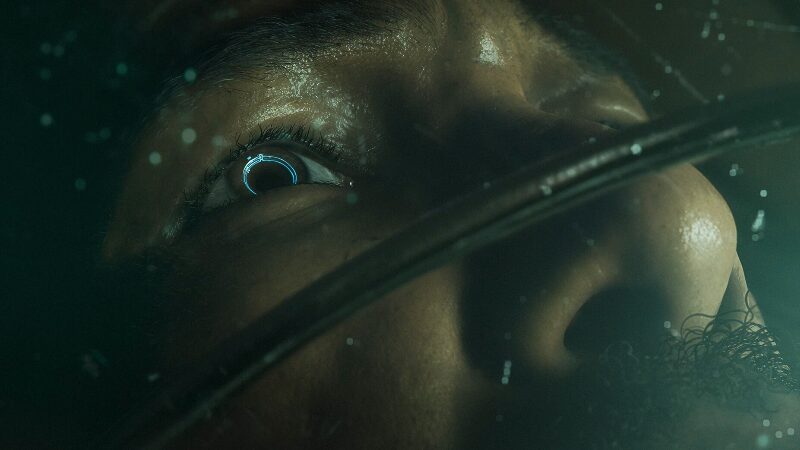
If there is one area where Cthulhu: The Cosmic Abyss consistently excels, it is its audiovisual presentation. The game builds a dense and oppressive atmosphere that often feels more impactful than any direct threat.
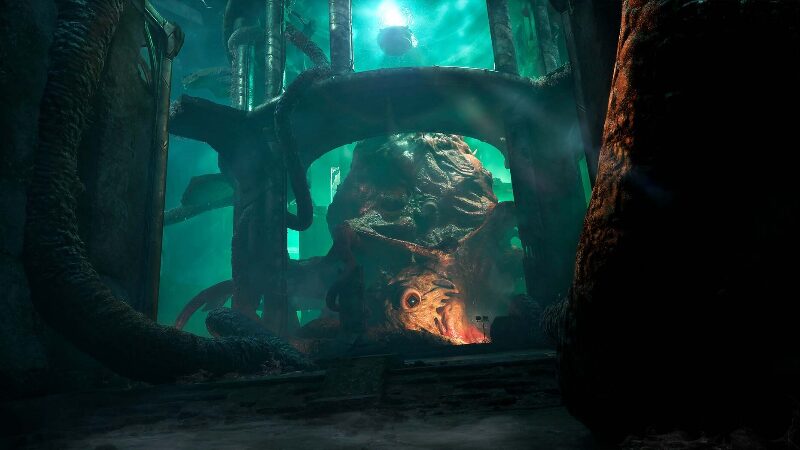
The deep-sea setting is central to this experience. Narrow corridors, dim lighting, and constant darkness create a strong sense of isolation. Outside the facility, the endless ocean reinforces this even further, making human existence feel insignificant. Visually, the game benefits greatly from modern technology, with detailed environments and carefully designed spaces that each feel distinct. Particularly impressive is the depiction of R’lyeh. Its alien architecture and massive, impossible structures evoke both awe and unease. These sections stand out as some of the game’s strongest moments because they refuse to explain what is being seen, instead leaving it deliberately mysterious.
Sound design plays an equally important role. Rather than relying on loud scares, the game uses subtle audio cues such as metallic creaking and distant unknown noises. Music is used sparingly but effectively to enhance key moments.
Another key element is perceptual distortion. As the game progresses, visual hallucinations and subtle changes in the environment begin to appear. This creates ongoing uncertainty about what is real and what is a result of the protagonist’s deteriorating mental state. However, this approach also has limits. Because the game avoids direct threats, some sections lack intensity. The atmosphere remains consistently strong but rarely reaches dramatic peaks, which may feel too restrained for some players.
Replay Value
Replay value is driven less by traditional gameplay incentives and more by its narrative structure. The game relies heavily on interpretative decision-making, where choices about clues and deductions subtly influence the story. There are no explicit branching dialogue trees, but rather a network of interpretative decisions. These can affect information availability and narrative interpretation, encouraging players to revisit the game to explore alternative outcomes.
The story itself is intentionally fragmented, meaning a single playthrough only reveals part of the full picture. Replaying allows for a deeper understanding of the events surrounding the facility and Lovecraft’s mythos. Additionally, hallucination systems and perception changes can vary depending on decisions, making familiar scenes feel different on subsequent runs.
However, the core gameplay loop remains largely unchanged. Investigative mechanics and puzzles do not vary significantly, which can make replaying feel repetitive from a mechanical standpoint. The appeal lies more in narrative interpretation than in gameplay discovery. Multiple endings provide some incentive for replaying, as they reflect different interpretations of events and the protagonist’s mental state. Still, the slow pacing can make repeat playthroughs feel less engaging. Replay value is solid but heavily dependent on interest in the narrative depth.
Conclusion
Cthulhu: The Cosmic Abyss is not an easy game to categorize. It is a deliberately focused experience that prioritizes cosmic horror through perception, investigation, and psychological tension rather than confrontation. This commitment is both its greatest strength and its most noticeable limitation.
At its best, the game fully embraces atmosphere and exploration. The oppressive sound design and slow-building sense of unease create a level of immersion that few games achieve. Combined with its narrative ties to H. P. Lovecraft, it delivers a haunting and memorable experience.
The investigative gameplay is also conceptually strong, offering players the satisfaction of piecing together a fragmented mystery. However, its execution is not always smooth. Puzzles can feel uneven, the interface occasionally lacks clarity, and information overload can disrupt the flow of discovery. Additionally, the deliberate absence of traditional horror mechanics means the game relies almost entirely on psychological tension. While effective in many moments, it can also lead to sections that feel too restrained or slow.
In the end, Cthulhu: The Cosmic Abyss is a game of contrasts: ambitious, atmospheric, and conceptually intriguing, but not always fully refined in execution. It demands patience and a willingness to engage with its slower, more interpretative design. For players seeking a contemplative horror experience focused on atmosphere and mystery, it is easy to recommend. For those expecting tighter pacing or more conventional gameplay structure, it may prove challenging.
 (7 / 10)
Good
(7 / 10)Rely on Horror Review Score Guide
A PC review code was provided by the publisher.