
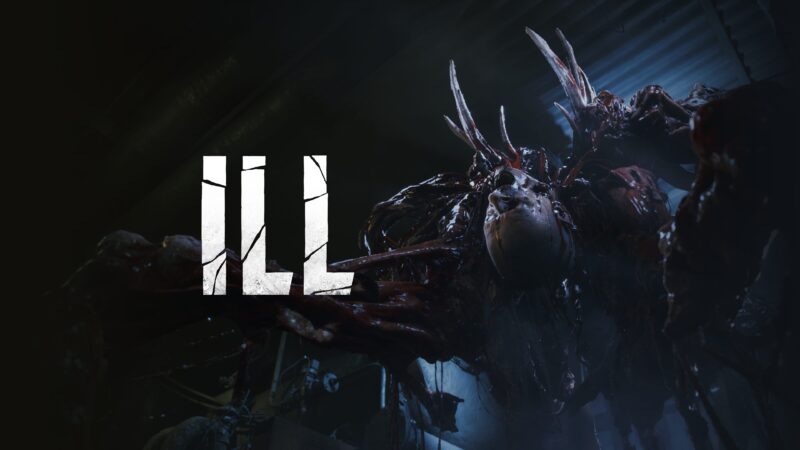
We have another interview for you guys that’s definitely been a long time coming, particularly with the slate of upcoming horror releases for us to cover. However, ILL has definitely been on our collective radars for a while, and the Rely team is excited to have participated in interviewing Max Verehin, CEO of Team Clout, the developers of the highly-anticipated, gorgeously gory ILL, a game that for a time, divided fans and media alike in terms of whether it actually existed or not.
Our coverage with Max includes addressing the rumor above, discussions on body horror, AI systems, narrative, sound design, and more.
ROH: ILL’s trailers place a strong emphasis on body horror and realistic creature behavior. How do you approach designing horror that feels disturbing on a psychological level rather than simply shocking or gory?
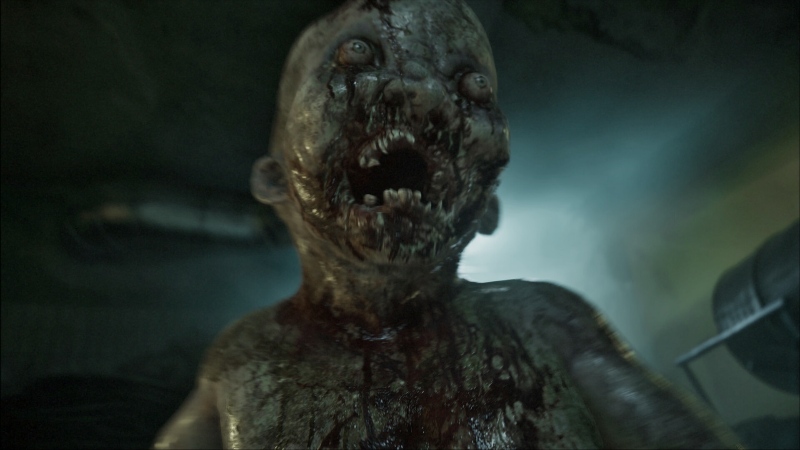
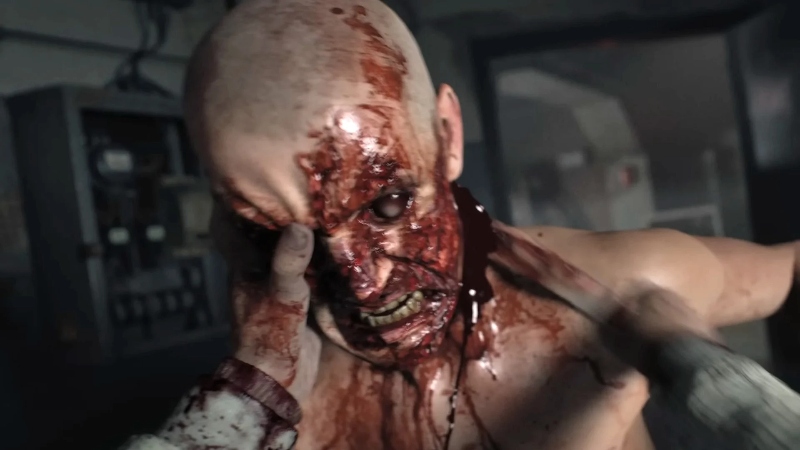
Although ILL isn’t a psychological horror game but rather an action-horror title, we definitely strive to make players feel psychologically uncomfortable as well. We don’t aim solely for shock value and don’t just use gore everywhere, but only where it’s truly needed. Gore and body horror certainly contribute to that psychological discomfort, as the anatomical and physical transformations of the monsters evoke a sense of revulsion toward things we are accustomed to in reality.
However, we also have plenty of other tools at our disposal. Working with binaural audio that permeates the environment and fills the players’ ears triggers paranoid sensations that a monster could catch you off guard at any moment. Combine that with oppressive environments, a dark storyline wrapped in mystery, and an atmospheric soundtrack – all of this together will disturb players not just visually, but psychologically as well.
ROH: The enemies shown so far appear to react dynamically to damage and environmental conditions. How much of a typical encounter is scripted versus driven by systemic AI, and how does that balance affect replayability?
Combat, monster’s response to damage, and the physics of the environment in the game are completely unscripted. How you approach and engage in a fight will trigger a corresponding reaction from the Aberrations and vice versa. For example, you can blow up a barrel, and thanks to our advanced physics and realistic dismemberment system, an Aberration will get shredded, fly backward, and slam into another monster, disrupting its attack and thus shifting the flow of battle.
Everything happens in real time and dynamically affects everything else. Because of this, replaying any given combat encounter can yield totally different results depending on the situation, as well as the actions of both the player and the monsters.
ROH: Many games treat dismemberment and gore as visual effects. In ILL, it appears to be deeply integrated into combat. How do you ensure that the injury simulation serves gameplay and tension rather than becoming a novelty?
Our dismemberment system is not only visually unique but directly impacts combat. For instance, if you’re down to your last bullet and an enraged Aberration is charging at you, one that a single bullet won’t completely eliminate, you can choose to shoot it in the leg to sever the limb. This restricts the monster’s movement, giving you more breathing room to maneuver and look for new ways to survive. But from a tension perspective, using that same scenario as an example, you might encounter a monster whose limbs can detach and become new, autonomous threats.
As it was seen in our latest Story Trailer. So, an action that seemed logical in the moment could actually multiply the dangers around the player. This is just one example of how the dismemberment system serves as a weapon both for and against the player.
ROH: Survival horror often struggles to balance making players feel capable enough to engage with threats while still feeling vulnerable. Where does ILL fall on that spectrum, and how did you arrive at that balance?
Since ILL is primarily an action-horror game, our goal is to strike the perfect balance between these two elements. We don’t want the player to spend the whole game hiding with no way to fight back against the Aberrations, but we also don’t want them to feel like they can easily overpower every threat, which would strip away tension and fear.
The game features a wide variety of firearms and melee weapons, but ammo and resources will be very scarce. Often, when stripped of supplies, players will have to frantically search for any melee weapon amidst the chaos to fend off the onslaught of hideous Aberrations. Yet even that won’t offer a sense of security – for example, a pipe ripped from a wall will degrade over time, and poor combat tactics could leave you completely defenseless, resulting in death.
And even though we want the action to be fun, players will need to tightly manage their resources, analyze the different types of Aberrations, and read the environment just to stand a chance at surviving.
ROH: The audio design in the footage released so far has been remarkably unsettling. Were there any specific philosophies or techniques the team adopted to make sound a primary source of fear rather than simply supporting the visuals?
First and foremost, we decided from the very beginning that we absolutely wanted to implement a binaural audio system in ILL, as this is exactly what allows us to create a genuinely unsettling and realistic sense of presence within our massive research fort – a place overtaken by an unknown entity and plunged into a living nightmare.
Binaural audio will allow players to hear every creak and rustle, unique to each location. Any sound around a corner or somewhere above will make you jump, because it could mean a deadly Aberration is lurking nearby. At one point, players might overcome their fear to investigate a noise, only to find nothing, but the next time, they might run into a horror they shouldn’t have approached in the first place. The sound in the game will literally pierce through the player, creating a sense of raw fear within a living, breathing, 360-degree environment.
ROH: Without revealing spoilers, how are you approaching storytelling in ILL? Should players expect a heavily narrative-driven experience, environmental storytelling, or something that sits between the two?
As we aimed to show with our recent Story Trailer at State of Play, ILL is a narrative-driven experience that seamlessly integrates elements of environmental storytelling. We have crafted a very dark plot filled with various characters, whom we introduced for the first time in the trailer, each with their own hidden motives. And in the midst of this, players, alongside the protagonist, who has just come out of a coma, will have to unravel a web of secrets, uncover the cause of this bloody madness, determine which characters can be trusted, and learn the nature of the mysterious entity that has overtaken the fort.
We’ve only just begun to pull back the curtain on the plot, so, without giving away spoilers, the main character has a very clear, vital goal to save what matters most to him, for which he will have to descend deeper and deeper into the unsettling madness surrounding him.
ROH: We are curious how developers dealt with people rumoring whether or not the game was actually real, as that’s been a big point of speculation for a long time?
We definitely saw the community’s concerns about this, and we worried about it too, but our goal was to convince people not just with words, but with actual content and gameplay captured in-engine on real platforms. Because of that, we were entirely focused on development.
Once we secured the support of Mundfish Powerhouse and reached a major internal milestone, we were finally in a position to start sharing trailers and footage to show the real game rather than just making empty promises. So, we are thrilled that along with the new trailer, we finally announced a 2027 release window and showed how the game looks not just on PC, but on consoles as well – specifically the PS5 Pro for the Story Trailer.
ROH: When players finish ILL, what do you hope they say distinguishes it from other modern horror titles, and what do you believe is the game’s defining identity?
In terms of identity, ILL is a survival action-horror game with a massive cinematic background. Alongside our extensive gaming experience, our team’s portfolio includes working on such acclaimed films and series as Until Dawn, IT: Welcome to Derry, V/H/S/Beyond, Longlegs, Azrael, and various Sony Pictures horror projects. And when the credits roll, we hope players recognize how hard we worked to make our project stand out by pouring our boldest ideas into it.
By blending our experience from both mediums and bringing out the best in terms of emotional impact, we aim to deliver true immersion and the visceral sensation of actually being inside the world of our game. We want to leave our mark on the horror genre and deliver something fresh and memorable – not just within gaming, but for the genre in a much broader sense.
We hope you enjoyed this lengthy interview and the thorough responses from Max and Team Clout as much as we enjoyed sending them the questions themselves. Rely will continue to provide coverage on ILL and we look forward (with bated breath!) to experiencing the game for ourselves upon its launch.