
It’s been a long and winding road for Vampire: The Masquerade – Bloodlines 2. In fact, few games in recent memory have had such a haunted development story. It quickly became one of the most anticipated RPGs of its generation. Excitement soon turned to unease as delays mounted and creative leads changed. Eventually, Paradox removed the project from Hardsuit Labs entirely. For years, the game’s fate remained a complete mystery.
When The Chinese Room (a studio known for atmospheric narrative experiences like Dear Esther and Everybody’s Gone to the Rapture) was revealed as the new developer, fans’ hopes were cautiously rekindled, trusting that the team’s focus on mood and storytelling could finally bring coherence to the long-troubled project.
Now, after nearly two decades of waiting and half a decade of production turmoil, Vampire: The Masquerade – Bloodlines 2 finally rises from its coffin.
A Reawakening in Seattle
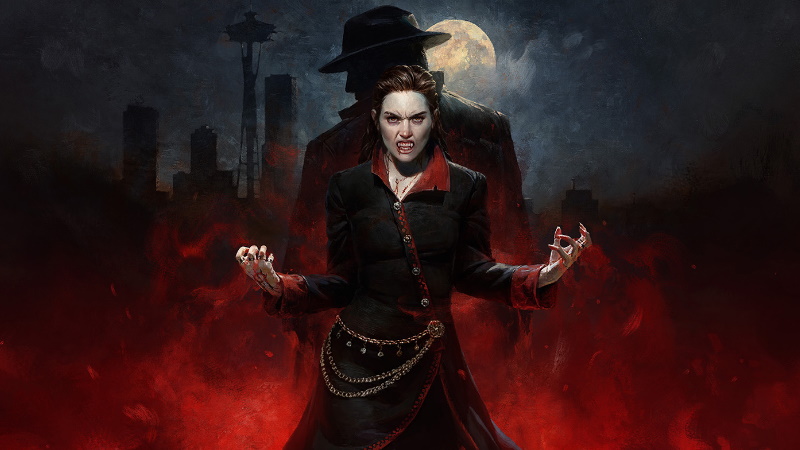
You play as Phyre, an elder vampire resurrected after centuries of torpor, emerging into a modern Seattle you barely recognize. Once a figure of mythic stature, they now find themself disoriented and stripped of context. Phyre’s reawakening is not a clean return to unlife, they are being invaded by a mysterious presence in their mind. Fabien, a Malkavian, once a detective for the Seattle Police Department, now trapped in the head of a long-forgotten kindred. At the core of the mystery lies a strange mark on their hand, a symbol that appeared upon their resurrection. It seems to pulse with unseen significance, possibly linked to Fabien’s intrusion into their consciousness.
The story unfolds across two distinct temporal rhythms. By night, you play as Phyre, navigating the city’s vampiric underworld, engaging in political maneuvering and enforcing the Masquerade. By day, when Phyre is forced into their slumber, control shifts to Fabien. These segments are quieter and more introspective. Confined to the safety of Phyre’s haven, Fabien investigates their condition through notes, case files and fragments of memory.
In these segments, the game shifts from a nocturnal power fantasy to something closer to an investigative drama. The bustling, rain-soaked streets of Seattle become contemplative spaces, filled with echoes of memory and fragments of information.
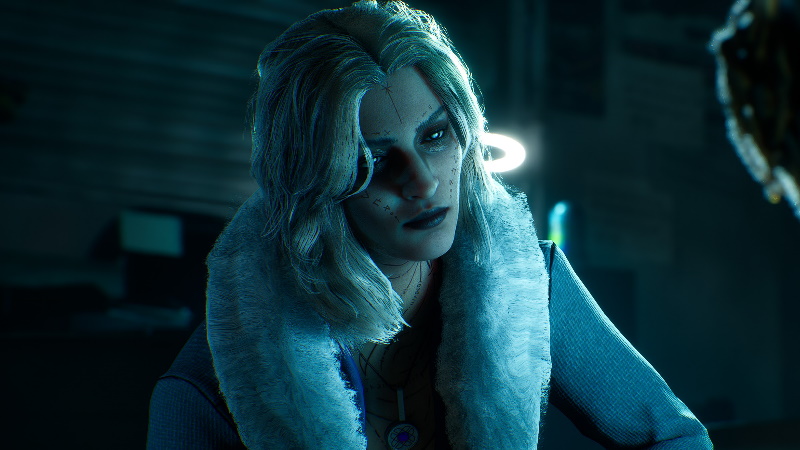
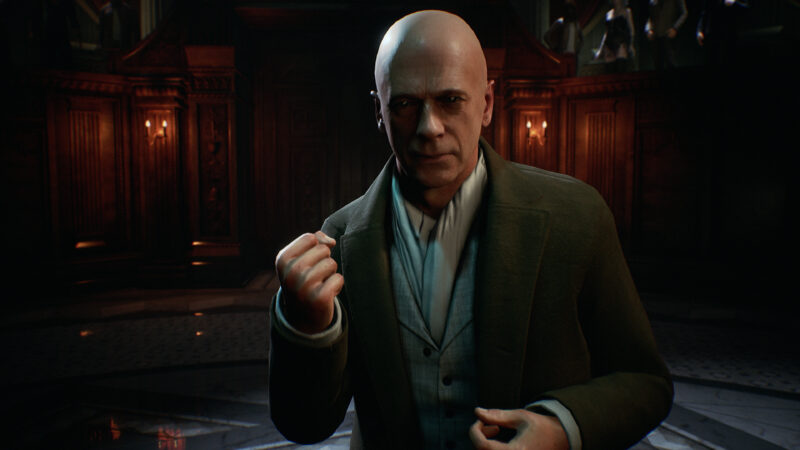
During your playthrough you also encounter a host of vividly drawn and unforgettable characters who do more than populate Seattle. They teach you how to live and survive within the world of the kindred. Figures like Lou Graham, the ex-Prince of Seattle or Tolly, a singular Nosferatu are at the top of their game. Those are not decorative NPCs but conduits for lore and politics. They and others serve as tutors in the cruel etiquette of vampiric society. They explain the law of the Masquerade and the informal rules that determine whether you survive or get staked.
Much of this education comes through extended, well-written dialogue. If you lean into those exchanges, you won’t just collect facts, you’ll earn trust and new dialogue options. The game deliberately ties relationship depth to engagement, learn someone’s history, respect their hurts and they will respond differently to you in critical moments. That mechanic is amplified by uniformly excellent voice work. Fabien’s performance in particular grounds the interior scenes with that 1920s detective noir cadence. It’s a blast hearing him talk with his Malkavian perspective to the world.
Fabien’s calm demeanor and slower pacing also create a welcome tonal counterweight to Phyre’s predatory energy. Where Phyre embodies power and instinct, Fabien represents patience and reason. He’s analytical and cautious, traits that make him invaluable when navigating the web of kindred politics. His knowledge of Seattle’s factions and his connections from his former life as a detective allow him to guide Phyre. Advising them on which allies to trust and how to approach dangerous figures from the city’s vampiric elite.
Character & Choices
For all its talk of choice and consequence, Bloodlines 2 isn’t really a traditional RPG. You won’t be building an intricate character sheet, tweaking stats or balancing skill trees across dozens of points. Instead, the game focuses on narrative tone and player expression within tight boundaries, more akin to a character-driven immersive sim than a full-blown role-playing experience.
Character customization is surprisingly limited. You can choose Phyre’s gender, select one of six vampire clans and pick a personal backstory. The game also let’s you select from several distinct outfits, it subtly affects how NPCs respond to you. Walk into a room dressed in something elegant and mortals may be more drawn to you. Choose a more intimidating look and conversations might take a tenser turn, with characters showing signs of caution.
These choices do have narrative texture. Each clan offers unique vampiric powers and the backstory colors how NPCs perceive you, but mechanically they don’t open radically different paths. Dialogue options, too, exist more as role-playing flavor. You can be cruel, charming, sarcastic or stoic and the world reacts accordingly. Some characters will respect your composure, others might remember your arrogance.
The Masquerade
One area where the game stays true to its tabletop roots is the Masquerade, the ancient law that forbids vampires from revealing their existence to humanity. Break it too blatantly, drain someone dry on a crowded street, use your powers in front of mortals or leave too many corpses in your wake and the consequences are terminal. Break the Masquerade too often and you’ll face the ultimate punishment: being staked and executed, permanently.
Yet for all its conceptual weight, the Masquerade system in Bloodlines 2 suffers from a frustrating lack of depth. While the idea of living under constant scrutiny fits beautifully with the game’s tone, the execution doesn’t quite hold up. It’s surprisingly easy to shake off suspicion once you’re caught breaking the rules. If you accidentally feed in public or draw too much attention, there’s little long-term consequence, the moment tension rises, you can simply glide or climb onto the nearest rooftop, wait a few seconds and the world forgets you ever existed. This quick reset breaks the tension the Masquerade is meant to create. In theory, every slip-up should feel like a serious threat to your unlife. In practice, the system resets too quickly, turning what should be a slow burn of paranoia into a momentary inconvenience.
Blood & Feeding System
The feeding system in Bloodlines 2 is fundamental to survival. Feeding is unavoidable if you want to make it through the night, but you’re never truly pressured by it. Hunger only becomes an issue when you decide to engage with it. You can go for long stretches without feeling the need to feed and while the mechanic still plays an important role in enhancing your powers, it lacks the immediacy and desperation that once defined the experience. It’s a notable shift in tone. The first Bloodlines made you feel like a predator barely holding back the beast within, while Bloodlines 2 allows you to play as a far more composed, deliberate elder who can manage their hunger at will. There’s a certain logic to that, as Phyre is centuries old, but it does diminish the ever-present tension that came with surviving the night.
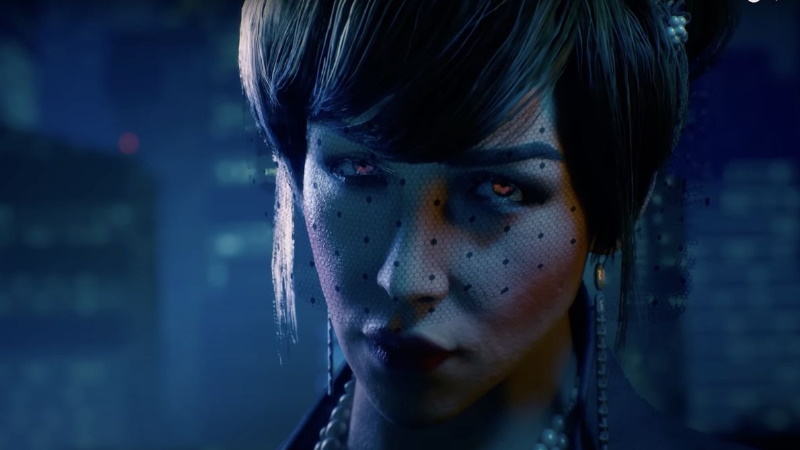
Through these Resonances, you can also unlock abilities tied to other clans, beyond the ones offered by your chosen lineage. It’s a flexible system that encourages experimentation and cross-specialization. However, you don’t gain access to these new abilities right after feeding, you have to unlock them by spending level points. You can equip only four active abilities at a time, which adds a strategic layer to how you build your playstyle. The different combat skills you can acquire are genuinely fun to experiment with. Some powers do feel significantly stronger than others, but that imbalance feels intentional. You’re not meant to feel fair, you’re meant to feel ancient, powerful and terrifying. You’re an elder vampire after all.
Combat & Vampiric Abilities
Perhaps the most disappointing structural choice in Bloodlines 2 is how the game handles progression. You do gain levels and those levels grant access to new disciplines and abilities, but beyond that the usual trappings of “leveling up” are largely absent. There is no meaningful scaling of your baseline stats, your melee damage in the first hour will be functionally identical to your melee damage at the end of the story. Your walk speed, stealth radius and core movement attributes do not incrementally improve as you invest time in the game. The few numerical improvements that exist are tied to unlocking discrete powers, not in improving the underlying qualities those powers might normally depend on.
The game leaves most of the sense of growing competence to the player’s own learning curve, as you improve at timing counters or chaining abilities simply through practice. This design choice undercuts the feeling of mechanical progression, as it turns much of the game’s “advancement” into a catalog of new toys rather than the sense your vampire is maturing or evolving in measurable ways.
By contrast, stealth is handled with far more care and rewards patient, considered play. Approaching an area silently, isolating opponents and thinning patrols by methodically removing targets is often the path of least resistance. If you take out half a room’s enemies before a firefight ignites, encounters become manageable and you conserve health and consumables, especially on higher difficulties. Leaning into stealth makes many sequences far more satisfying, the game rewards thoughtful planning and slow, deliberate execution, which prove more effective and more fun than charging in recklessly.
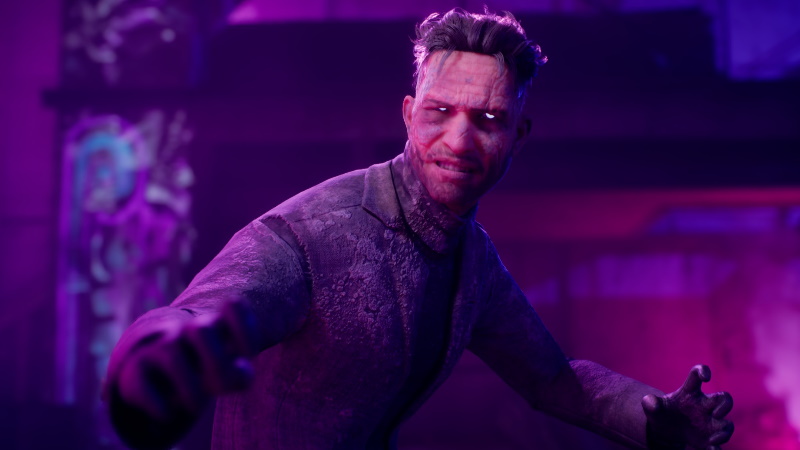
That said, combat can still be brutally unforgiving under certain circumstances. Even on normal difficulty, there are moments when enemy placement, choke-points and grouped AI can overwhelm you quickly. A well-timed flanking or a perfectly executed telekinetic toss can tilt a fight in your favor, but other battles collapse into chaos when foes surround you and drag you into a tight corner with little room to maneuver. In those scenarios the margin for error is thin: by the time you wriggle free your health bar may be dangerously low.
The World of Seattle
One of the more disappointing aspects of Bloodlines 2 lies in the population of Seattle itself. For a city so visually rich and atmospherically realized, its inhabitants often break the illusion of immersion. There’s a surprising lack of variety among the city’s NPCs, every third person you encounter seems to share the same face, posture or animation cycle. It’s not uncommon to pass two identical characters standing beside each other. The issue extends beyond visuals. Occasionally, voice lines assigned to generic NPCs glitch or overlap, resulting in sudden, jarring switches between male and female voices mid-sentence. These moments are rare but noticeable and they shatter the carefully built atmosphere that the rest of the game works so hard to sustain.
Seattle itself is visually breathtaking but mechanically thin. The city divides into several districts, each radiating it’s own mood and carrying it’s own history. But beneath that beauty lies a rigid structure. The game doesn’t offer an open world, instead it presents a series of connected zones where your path largely follows the next quest marker. You’ll spend much of your time running long stretches between missions, with little to do in between except admire the lighting or search for scattered collectibles like graffiti tags. There are occasional side quests and secrets, but nothing that truly changes your relationship to the city.
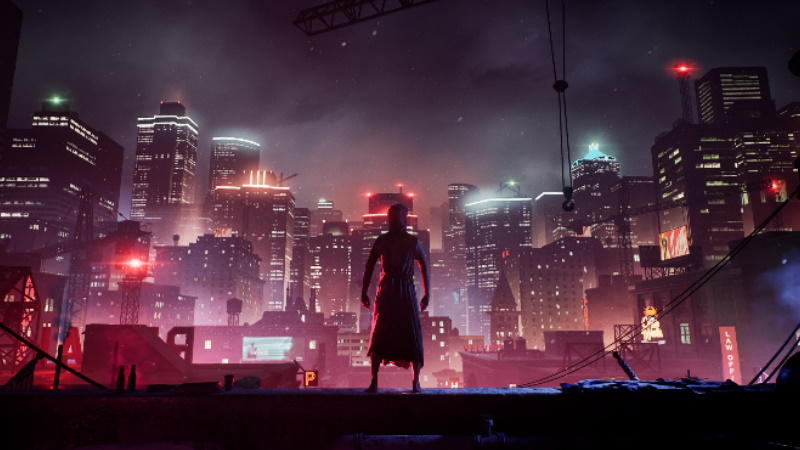
Phyre moves through Seattle with a predatory grace. They can glide across rooftops, scale walls and launch themselves through the night in long, fluid arcs that make traversal feel almost balletic. Moving from one neon tower to another feels powerful, so you actually feel like an immortal being. The city becomes your hunting ground and every leap or climb reinforces that intoxicating sense of being something beyond human.
Playing as Fabien couldn’t feel more different. While Phyre’s sections are kinetic and full of supernatural fluidity, Fabien’s sequences take place at a deliberate, grounded pace. You can only walk and I mean truly walk, at a slow and measured pace that immediately changes the rhythm of play. The developers did include a way to move “faster,” but not in the traditional sense. Pressing the run button doesn’t make Fabien sprint, instead it accelerates the passage of time and the world around him. NPCs move more briskly, the city flows a little quicker and Fabien’s movements synchronize with that temporal shift. It’s less a run and more a compression of time. There’s also no combat when you play as him, his focus lies entirely on investigation, deduction and introspection. He moves through the world not as a predator, but as an detective, piecing together clues.

Final Thoughts
Vampire: The Masquerade – Bloodlines 2 carries the weight of its legacy, confronting both the shadow of its predecessor and the scars of its own long, troubled development. It emerges from years of uncertainty not as a perfect successor, but as an atmospheric reinterpretation. At its best, Bloodlines 2 is mesmerizing. The writing is sharp, the characters memorable and the performances nothing short of remarkable. The voice acting, in particular, elevates the entire experience. Every character feels distinct, layered and emotionally real.
Mechanically, the game doesn’t always live up to its narrative ambition. The absence of real power progression, the limited RPG depth and the occasionally clunky AI remind you that this is not the complex systemic sandbox some fans might have hoped for. Combat is fun but shallow, relying more on flashy vampiric abilities than true mechanical evolution.
And yet, despite these imperfections, Bloodlines 2 succeeds where it matters most: in atmosphere, tone and identity. Seattle is gorgeous. Traversing it as Phyre feels powerful and cinematic, while exploring it through Fabien’s slower, introspective lens offers a welcome emotional counterpoint. The interplay between these two gives the story a rhythm unlike anything else in the genre. It’s a story-driven experience first and a system-driven one second.
Once you surrender to its rhythm, the game reveals it’s true strength, an evocative story and rich world-building. It’s not flawless, but it’s captivating, ambitious and above all, worth experiencing. If you give yourself over to its world and it’s characters, Bloodlines 2 rewards you with a deeply immersive narrative that feels personal and powerful. For those willing to adapt and embrace its peculiarities, it’s absolutely worth your time.
 (7 / 10)
Good
(7 / 10)