
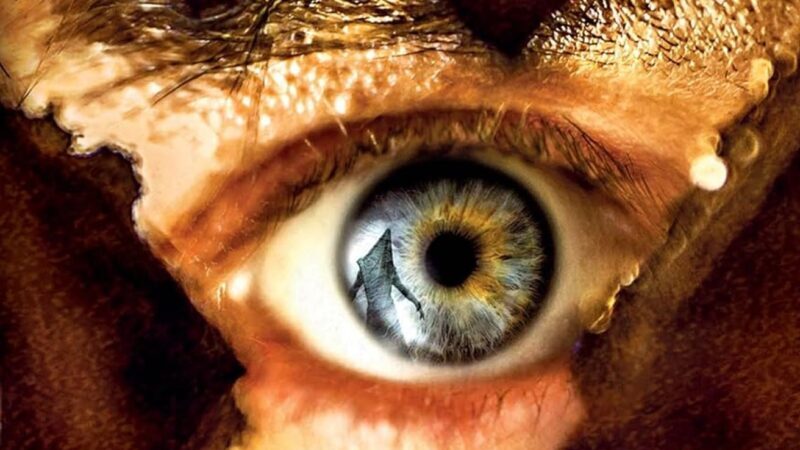
There is a particular kind of irony in a movie novelization outclassing the film it’s based on. It doesn’t happen often, but when it does, I was left asking, what the hell went wrong at the source? In the case of author John Passarella’s Return to Silent Hill: The Official Movie Novelization, that question is not rhetorical. It has several answers, all of which I will explore in my personal assessment of the novel.
When Christophe Gans’ Return to Silent Hill arrived in theaters in January 2026, it basically landed with all the grace of a body dropping into Toluca Lake. Critics eviscerated it almost immediately, and the broader conversation around it quickly pivoted from disappointment to a brutal burial of an entry in a franchise that had, prior to the recent video game entries, been stumbling for two decades. Further, the cinematic history of Silent Hill is not a proud one, and this latest entry did little to rehabilitate it. Against that backdrop, Titan Books released Passarella’s official novelization just days after the film.
Passarella is no stranger to the tie-in space. A Bram Stoker Award-winning author whose credits span franchises from Buffy the Vampire Slayer to Supernatural, he used the Halloween (2018) novelization as his proving ground for the film adaptation format (in fact, my copy of the novel even came with a bookmark for that novelization.) He brings that earned fluency to Return to Silent Hill, and it shows in every chapter. This is a writer who understands that novelizations aren’t just movie script transcriptions.
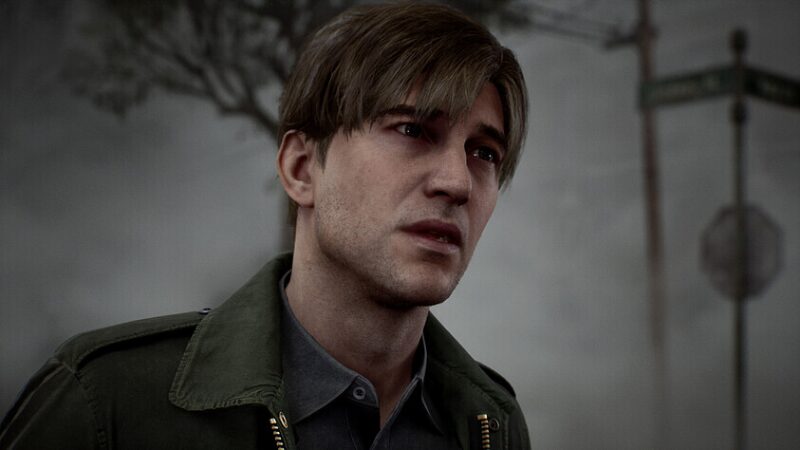
Passarella has spoken openly about his philosophy, in that he approaches a novelization as though the movie were based on the book, not the other way around, restoring the breathing room that film editing necessarily strips away. That philosophy is precisely what saves this one. Where Gans’ film compressed James Sunderland’s grief into a series of murky and undercooked flashbacks, the novel lets the relationship between James and Mary breathe some.
The result is a novel character version of James who earns the reader’s unease rather than simply occupying screen time. The author also expands the dynamics of Mary’s unsettling circle of companions, lending the flashback sequences a creeping texture that draws on the sensibilities of Twin Peaks, which are shades the film never came close to portraying.
That tonal consistency is where Passarella, to me, firmly distances himself from the film’s most overtly baffling creative choices. The novel has no interest in being goofy or memeable. It maintains a pitch-dark seriousness throughout, treating the mythology of Silent Hill with the reverence the source material demands. The grief at the story’s center, which the game understood on an almost cellular level, is handled in written prose with weight.
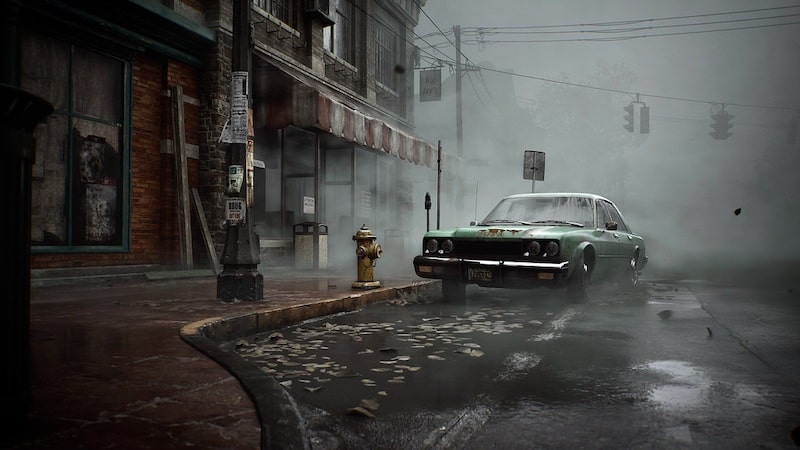
For those who came to the novel as Silent Hill 2 devotees, Passarella has another gift. He spent considerable time studying out-of-print game guides and complete playthrough videos to identify where the screenplay deviated from the original game, seeding the text with easter eggs along the way, including appearances from creatures that feature in the game but never made it to the screen. This is exactly the care that rewards long-time fans without alienating newcomers, a difficult balance the film never quite managed in either direction. He also uses the extra page count to develop the cult activity surrounding Mary’s father, a subplot that has roots in the broader Silent Hill game canon. On the page, that thread feels considered where, in the film, it registers as “white noise.” (Get it?)
What the novelization ultimately makes clear is that the underlying issues were never with the story itself. Silent Hill 2 is one of the most psychologically rich narratives in gaming history, a meditation on guilt and grief that needs almost nothing added to it in order to devastate you. Sadly, the film just couldn’t find them in the fog, but we are redeemed somewhat as readers.
The honest caveat, though, is that novelizations do carry a ceiling. No matter how skillfully Passarella renders the fog-choked streets of Silent Hill in prose, the question of why you’re here, reading a book about a movie that failed, does hover at the periphery. But that undersells what Passarella actually delivers, which is the version of this story that the film wanted to be and couldn’t manage to become. For horror readers who already love the franchise, or who are simply curious what a capable author can extract from troubled material, this is a somber and genuinely effective read, and one that is worth the buy.
You can purchase the novelization for yourself, and a signed version, on author John Passarella’s website.
 (8.5 / 10)
Great
(8.5 / 10)