
 IDOLxISxDEAD
The original Fatal Frame II released in 2003 and struck a chord with many audiences, becoming the most well-known and talked-about game in the series for years to come, in addition to being the one that put the Fatal Frame name into the zeitgeist of horror gaming. The game was remade in 2012 for the Nintendo Wii, using the Fatal Frame IV engine, with revamped visuals and control schemes as well as some new content, but it only received a release in Japan and Europe. While the series still did get one more release after the 2012 remake, with 2014’s Maiden of Black Water, the series would be dormant for several years afterward, until Maiden was remastered for modern platforms in late 2021.
In 2025, they announced they’d be taking yet another stab at remaking Fatal Frame II for modern platforms, and after getting to play several hours of it last month, my hands-on preview detailed how this remake changes a lot of the core of the game, updating it to be closer to Maiden of Black Water‘s gameplay engine, but still keeping certain aspects close to the original game’s spirit. Now that I’ve fully finished and explored the full game on two different playthroughs, on two different platforms, and with a lot of different options, we can present a final verdict on how the game fares.
Visuals/Storytelling:
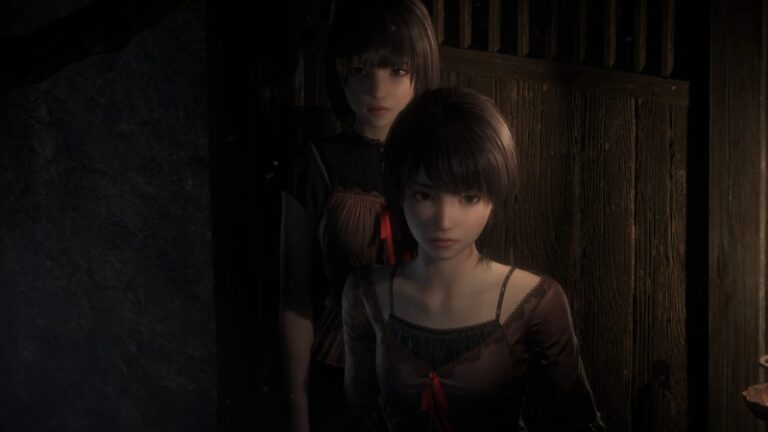
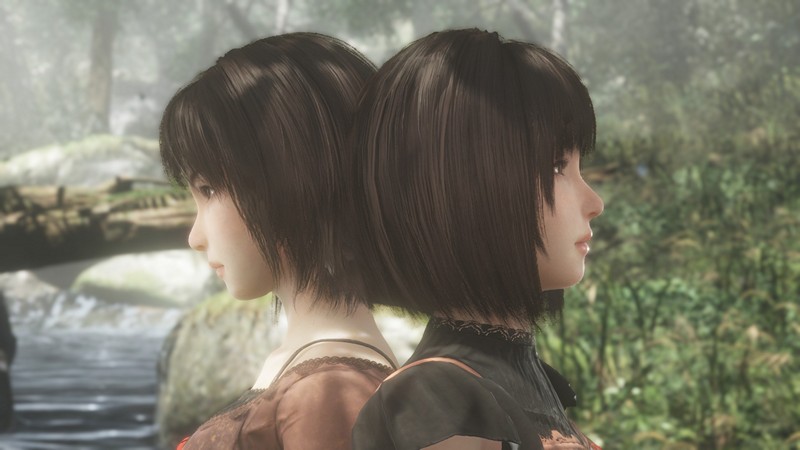
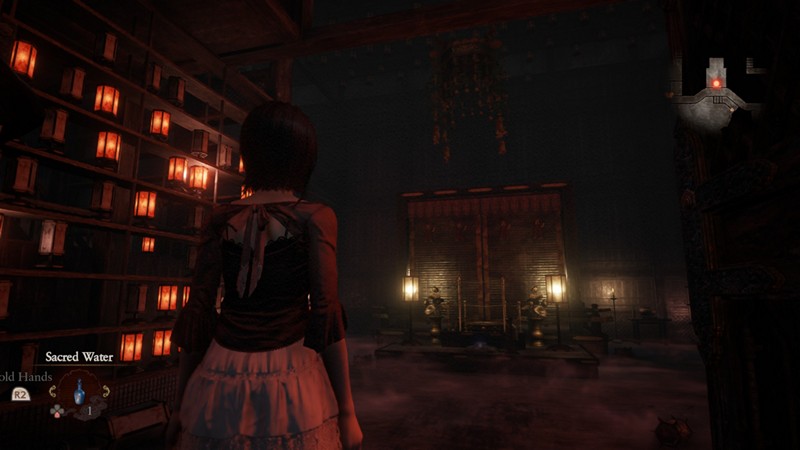
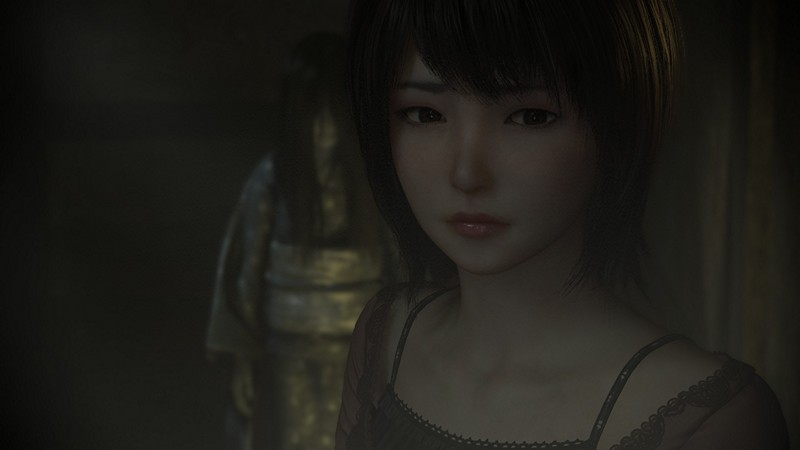
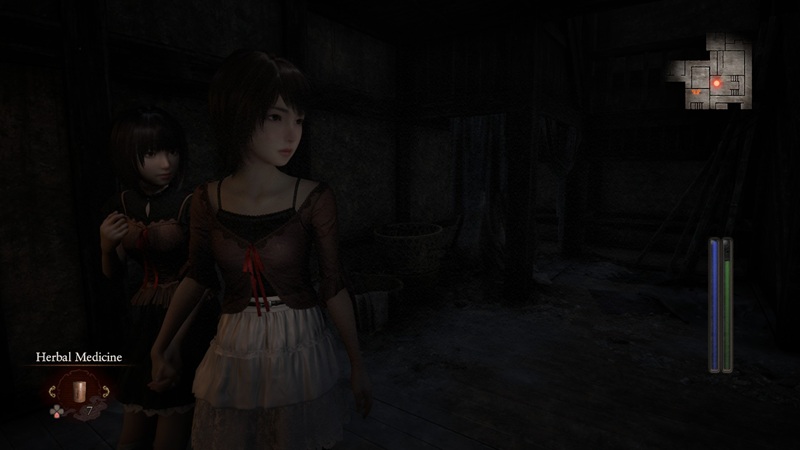
Starting with the visual updates, the game has been reimagined with a modern game engine that’s full of realistic details but still maintains the unique doll-like, anime-inspired art style for the characters, and nearly everything you see or experience looks visually beautiful, even if some is also frightening. The characters have gotten a substantial facelift in terms of making them have more realistic faces, features, and bodies, moving slightly away from the heavily anime aesthetic the series was known for, but still making them not quite like real humans.
The increase in fidelity and updating of the art style allows for more nuanced character expression through facial and body expressions, which greatly helps with the storytelling and immersion in the world of Fatal Frame. This also makes it feel a little less like you’re watching an anime, even though the features are still clearly exaggerated in some ways to honor the original character designs.
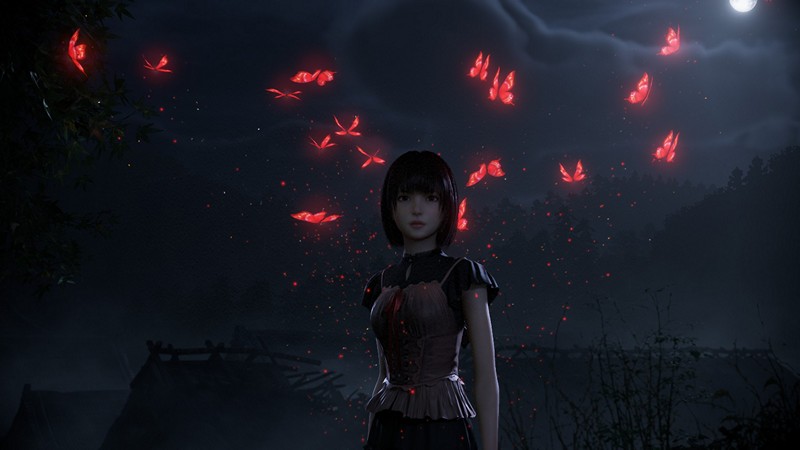
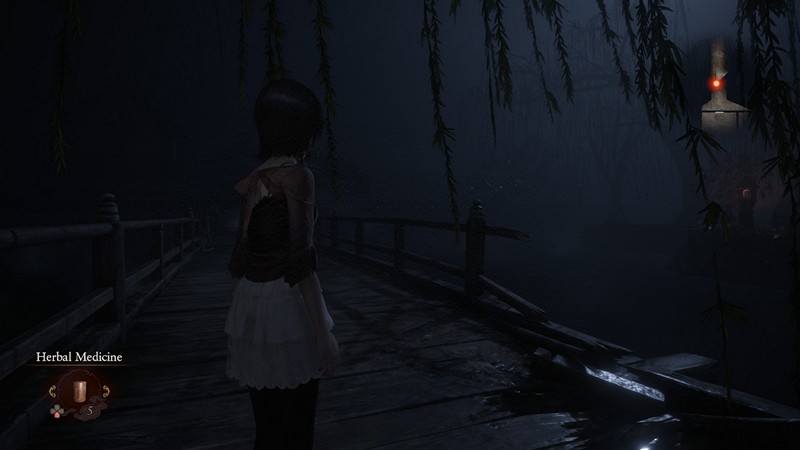
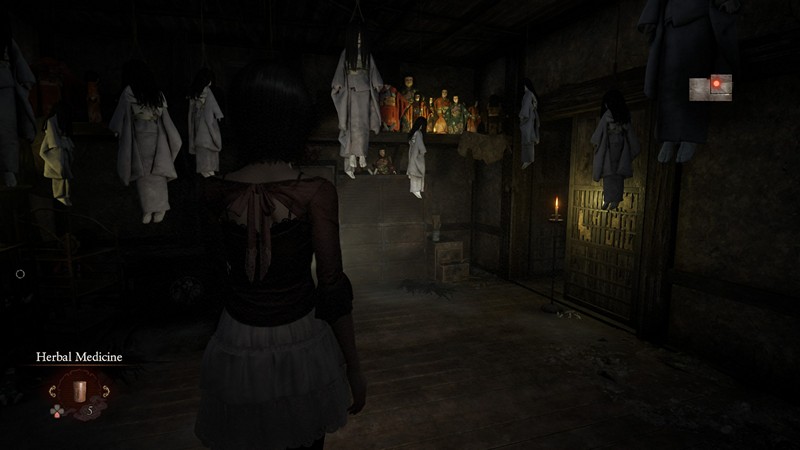
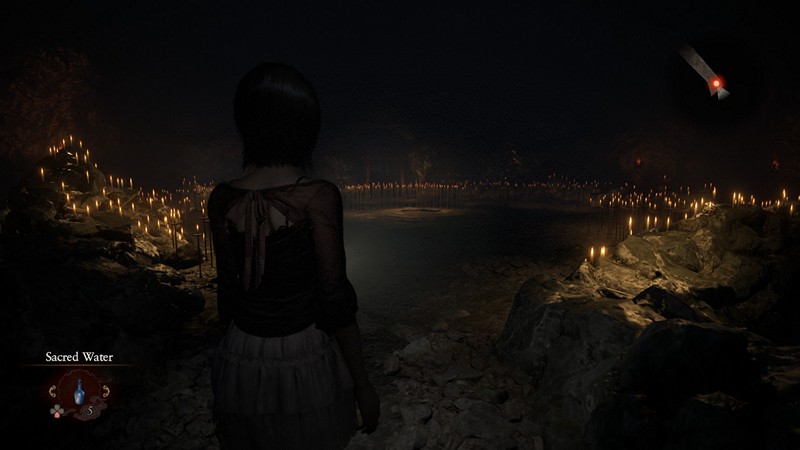
The village where the game takes place has been expanded and improved in many ways, with more areas to explore and more things to see, effectively making the town feel a little more lived-in and expansive than in the original game, which had a relatively small map and few places to see, all things considered.
This game design element has typically been the norm for the Fatal Frame series, where you only visit a few physical areas throughout your journey, but have to retrace steps through those same areas to encounter new puzzles, ghosts, or information, often through the eyes of another playable character or in another period of history. Even though things are expanded here, it still maintains the feeling of being a small, remote village, and this is one of the few games in the series that doesn’t feature the character-swapping, generally sticking with Mio for its whole running time.
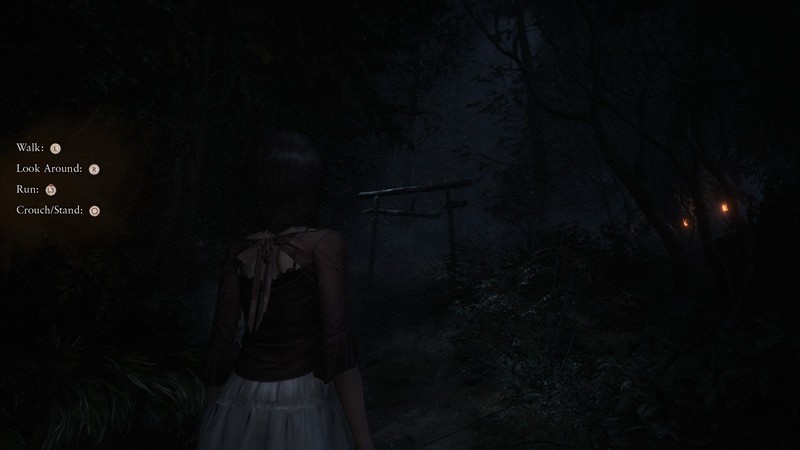
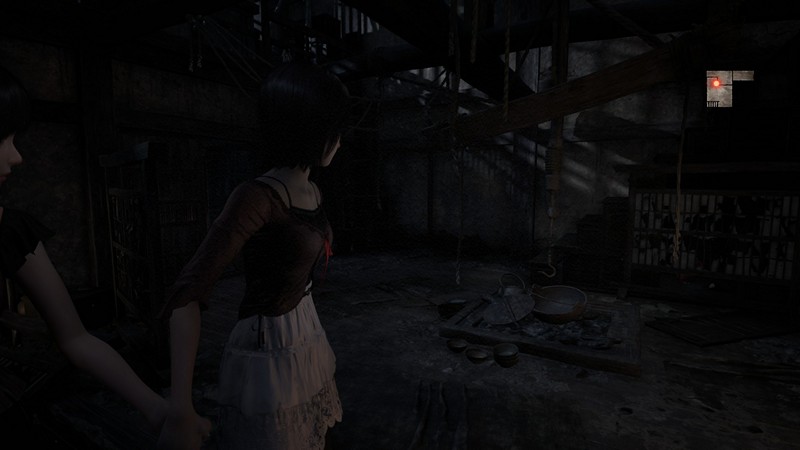
I’ve always thought that Fatal Frame II in particular could’ve used some better storytelling since the story of the sisters never had much particular emotional relevance for me and the characters mostly felt like cute anime girl avatars, with their original models looking far too young in age for the mature-ish story they were trying to tell. I can definitely say the storytelling hits harder here, due to the better expressions of the characters, the new hand-holding game mechanic, and slightly less anime-level voice acting, all of which added some extra immersion to the experience.
Being able to choose the original Japanese voice acting goes a long way, which is something that the original Western releases of Fatal Frame never allowed as an option, and that the recent remasters included as a standard. Even if the Japanese acting can feel a little cliche and anime at times, it manages to express a little more with the emotional performances from the main cast and some frightening (sometimes irritating) voices of the spirits and ghosts.
That said, this is still a Fatal Fame game, where the storytelling tends to be a very vague or romantic sense of storytelling that’s mostly about ambiguous character relationships and emotions rather than being a straight-forward story, so it doesn’t have terribly profound things to say overall. It’s also so deeply intertwined with traditional Japanese mythology and beliefs that it can often fall flat on Western audiences who would prefer to have a series of narrative events happening rather than reading notes and files about what a ghost was feeling on a particular day in the 17th century. In any case, this remake allows more of the emotion to be conveyed than ever before, even if it’s not usually saying something that’ll impact you deeply in most cases.
Its dubious dealings of spiritual possession over hundreds of years, reincarnation, and Shinto curses goes a long way to set a mood (vibes?) but doesn’t do a lot to move a plot forward in a meaningful way; however, the overarching theme that people who are no longer living are still able to be “with” us after they’re gone still resonates pretty well overall. This story (and most other Fatal Frame stories) historically have tended to resonate a little more with some female audiences, and while I can’t personally speak to that, I do know several friends who have said that the story has a more personal meaning for them as women.
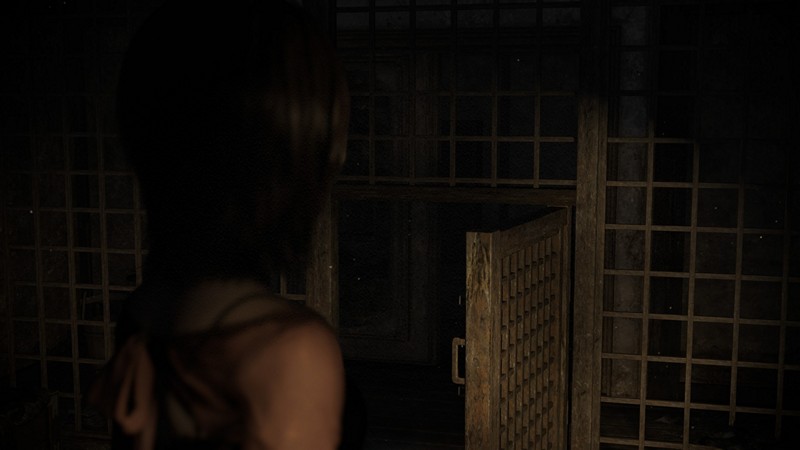
However, I’ve accepted that the story isn’t all that important to the game overall, since the gameplay, style over substance, and immersion in the world tends to carry itself to a large extent. Regardless of that, I can still say the way the story is told here is stronger than most of the other entries and definitely better than the previous two versions of Fatal Frame II, even if it might not have personal impact for me.
Gameplay/Controls:
The gameplay is where most of the biggest changes appear, with most of them being absolutely wonderful updates to the series formula, though it does come with a few downsides. Things like the previously-mentioned hand-holding mechanic are a nice touch during the few parts of the game that the two sisters are together. This gives you some healing and willpower recovery when you need it, as well as allowing you to control Mayu and tell her where to go, instead of leaving her behavior to be entirely handled by an idiotic and cumbersome CPU.
Many other elements from the more recent Fatal Frame games are also included here, like having to reach out for items (which can still be interrupted by a ghost,) an on-screen mini-map, improved combat controls and lock-on function, slightly faster movement, and several other quality-of-life aspects that the series later developed.
There’s several other new elements for the series, including crouched movement that introduces stealth-based gameplay mechanics, a tracking system for side stories and extra notes, a physical dodge maneuver that can be used any time, and a greatly changed and expanded combat system.
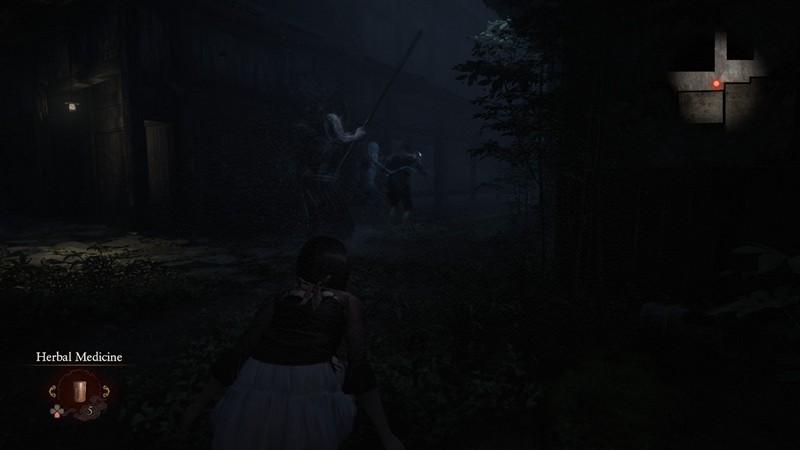
Starting with the new crouching and stealth system, this is one of the best additions to the game overall, introducing several new elements that weren’t present in the series before and that make the gameplay a lot more interesting and diverse. While some basic stealth elements were introduced very briefly in the extra Ayane chapters of Maiden of Black Water, this remake makes them a main component of the whole game, with the ability to manually turn off your flashlight and crouched movement working together to enable your advantages in stealth.
Along with the general ability to avoid some ghosts when you don’t want to engage with them, the stealth mechanics allow you to sneak up behind some enemies and take a stealth shot, doing far more damage than you usually would, which allows you to save film and avoid some drawn-out encounters. This also introduces the new element of having to actively hide from certain powerful ghosts that you’re unable to combat at certain points in the story, forcing you to run and find a spot where the enemy can’t see you and waiting until they leave. There’s even segments where a ghost will have a movement pattern it follows, and you’ll have to actively sneak around it, completing puzzles and exploration without getting caught by them.
These elements all work together to add extra complexity, strategy and tension to most parts of the game and are a resounding success as a whole for me. It’s not entirely necessary to use the stealth mechanics aside from a few scenes, but it can work to your advantage if you choose to use it regularly. In addition to the new areas to explore, the stealth mechanics up the level of immersion compared to both previous versions of the game, to where even if you’ve played the previous versions several times, the new elements make the experience feel fresh, and it even switches up the progression of the main story at certain points to keep you on your toes, making me glad they didn’t go for a 1:1 remake here.
There’s also a new added system for exploration where your camera filters are used as puzzle-solving tools in a way that feels satisfying and adds a little more immersion rather than just simply taking pictures of certain spots to progress. Each filter has a different ability in combat and outside of combat, giving a little more complexity and usefulness to the Camera Obscura in general.
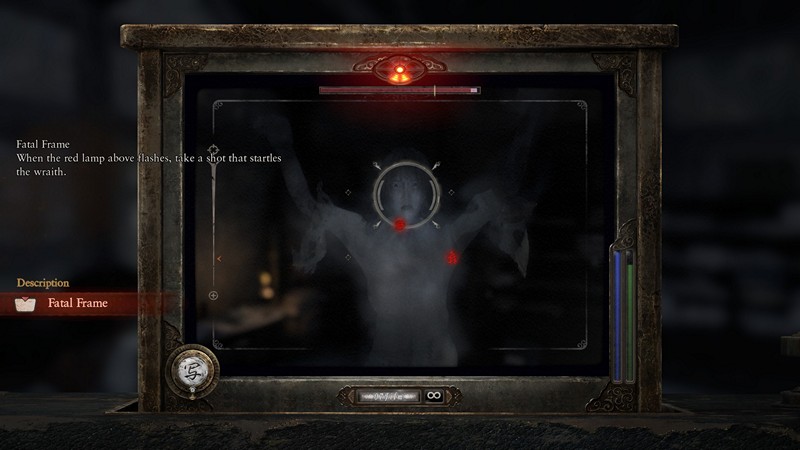
Now we’ll need to discuss the biggest flaw of this remake, which is the revamped combat system. Since this is the first game in the series that Team Ninja has developed, it seems they’ve taken it upon themselves to greatly change the combat system to not only make it much more complex and diverse (somewhat to a fault,) but also to make it very unbalanced and unreasonable from a difficulty standpoint.
There’s lots of new features for the camera, and each lens has several different abilities that can be upgraded in different ways, making for a few too many options when it comes to customizing and prioritizing how you want to upgrade your equipment, with most of the upgrades feeling like they barely made any positive change at all after upgrading. These new options also require having to constantly be thinking about which filter to use in each situation and against each ghost, frequently juggling far too many elements, which wasn’t really a factor in the comparatively simple original version.
This over-complexity made the amount of options feel overwhelming, and made it feel like you might always be choosing to prioritize the wrong things. Thankfully, it’s pretty easy to reset your upgrades and re-assign them when you choose, but it’s a lot of extra work to constantly be re-specking your upgrades just to test out if they’re worth keeping. On top of the amount of options already being overwhelming, the text descriptions that explain what each camera’s strengths are don’t give a whole lot of valuable information, and the upgrade menu gives you no real data as to what each upgrade improves and exactly how much it improves.
The combination of the new lenses, manual zoom and focus functions, the upgrade modifiers, and the new charm attachment system just made the Camera Obscura feel unsatisfying during combat in most scenarios. Despite re-specking and trying a dozen different combinations through my playthroughs, none of them ever felt quite satisfying or adequate for the combat until I got to the New Game+ option, where you could expand the camera beyond its normal upgrade abilities. This leads into talking about the difficulty of the combat as a whole, where the Camera Obscura is only one of many elements that greatly throw off the balancing.
In the first few chapters of the game, the combat is essentially there as a slow-ramping tutorial to teach you all of the new combat mechanics and elements you’ll be responsible for handling as you play, and the combat is more than reasonable in these early sections, with a decent balance on difficulty and resources. However, once you hit chapter 3, things take a heavy step in a problematic direction, when it introduces some of the more aggressive ghosts, the aggravated state, and multi-ghost encounters.
I’m not sure why this massive shift in difficulty took place, whether it was to possibly compensate for all the new added combat abilities, trying to “shock” returning players who thought they had mastered Fatal Frame’s combat, or maybe just Team Ninja trying to bring it up to the relative difficulty standards of their other games. In any case, the amount of film you get from pickups plus a cap on how many of each film you can hold, the damage that each film does, and the general difficulty of the combat is off the charts, even compared to the hard modes in the original Fatal Frame II, which I replayed after finishing the remake just to directly compare.
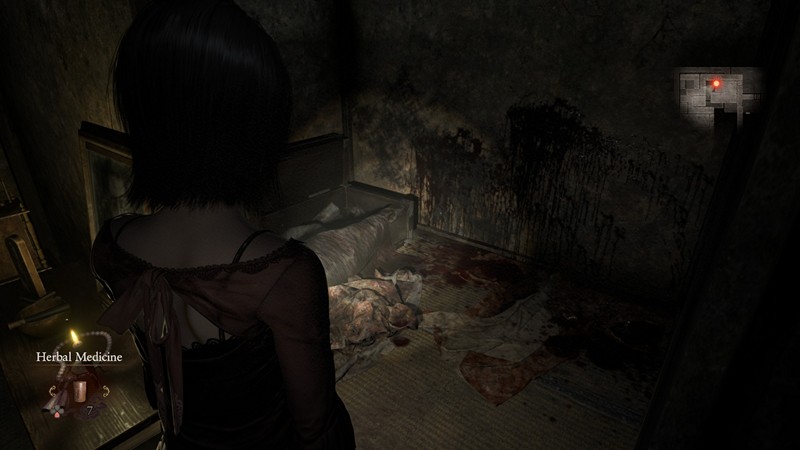
As someone who completed the hard modes in every previous Fatal Frame, this one feels like there was far too much difficulty imbalance in the combat, which made most encounters feel tedious and far more frustrating than they needed to be, even after turning it down to the easiest difficulty setting to compare. Combat encounters in Fatal Frame have always been a slower, more meticulous affair, but I personally don’t want to feel like I’m fighting a boss in an RPG every time I fight a common ghost, and even after mastering the Fatal Frame and Fatal Time mechanics, the encounters still drag out for far too long.
Aside from having less resources, more confusing upgrade and customization options, and generally doing far less damage than ever before, it’s compounded by the slew of new abilities they’ve given the ghosts to further drive you insane. Even common ghosts now go into an “aggravated” state several times in each fight, which allows them to heal most or all of their life bar in seconds, remaining enraged for a good amount of the battle, allowing them to move faster, take less damage, do more aggressive attacks, and also to trigger their healing phase any time they like.
Ghosts also now have the ability to tackle you to the ground once your stamina (willpower) runs out, where you’ll have to struggle with them to get a face shot while the camera waves around wildly in the struggle. While Maiden of Black Water had a slightly similar combat element, it wasn’t nearly as obtrusive as this one, which just slows down the pace of each encounter greatly.
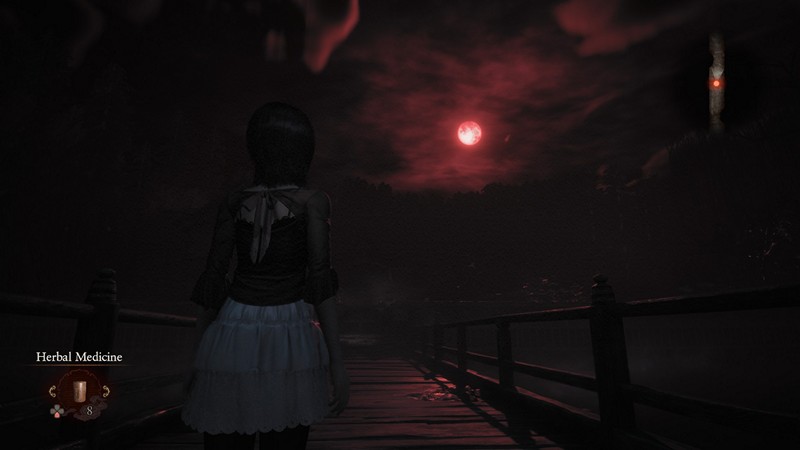
Additionally, some ghosts now have the ability to completely blind you for long sections of the battle, where you can’t see them at all until you get very close, making you have to constantly change filters and deal with all kinds of other extra nonsense during the encounters that wasn’t present in the previous versions. Towards the end of the game, as the enemies kept getting stronger or having more abilities to extend and complicate every single encounter to the point of feeling like a chore, I started simply wanting the encounters to be over before they even started, getting almost no enjoyment out of the combat even when switched to the easiest setting.
I hope they’ll add some more options to tweak or adjust the difficulty in the future or perhaps just reconsider bringing back the balance that made the combat enjoyable in previous Fatal Frame games, but this is the biggest sore spot for an otherwise excellent remake.
Performance:
As for performance, as I was able to test both the PC and Xbox Series versions, and the PC version ran and looked great, even on a gaming computer that’s already around 6 years old, with tons of options for adjusting the visuals, resolution, framerate, and much more. However, as of the build we got to play, the console versions have very strict framerate locks on both PS5 and Xbox and very few options for adjusting any specific elements for performance.
This could just be a case where they plan to add different “Performance” or “Quality” modes after launch to allow players more options, but in the current pre-release state, these versions are locked to 30 FPS maximum, and struggle to even hit 30 frames most of the time. The performance on consoles needs a lot of work, but hopefully will get there before the game is available to the public later this week. The controls generally worked quite well across both versions, though using the mouse and keyboard was awkward when the series has traditionally used a controller.
Conclusion:
This remake aims pretty high at trying to update a survival horror classic to the modern era, and succeeds with flying colors on many of its updates, but also fumbles a few of them, which need some more work and tweaking before the whole package feels truly top-notch. It’s still a pretty great experience if you can muster the patience to navigate the obtuse camera upgrade and combat systems, but it may be pretty tough for many players to endure.
I’m hoping a few of these elements can be polished to make the game reach its true potential and also hope they’ll consider remaking the superior first game in the series, but this is still a worthwhile experience for fans of the series, especially on PC.
 (7.5 / 10)
Good
(7.5 / 10)