


Few literary works carry the cultural gravitas of Dante’s Inferno by Dante Alighieri; in fact, I have a copy sitting on my shelf as I write this preview. Its architecture of sin and punishment has shaped centuries of visual art, theology, and popular imagination. The upcoming game release, The Alighieri Circle: Dante’s Bloodline doesn’t attempt a direct adaptation of that poem, but it deliberately situates itself in its shadow. The result, at least in its current, 20-minute demo form, is a project with clear artistic ambition and equally clear execution gaps.
Described by its developers as a first-person psychological “mystery thriller” rather than a combat-driven horror game, Dante’s Bloodline frames Hell as a deeply personal experience. Players assume the role of Gabriele Alighieri, a modern descendant of Dante, whose family bears the responsibility of performing “The Dive,” a ritual descent into the underworld to reseal its gates. The premise flirts with melodrama, but it also provides a strong thematic hook in inherited guilt, generational burden, and the psychological costs of legacy.
The demo opens in the Alighieri family manor, and it’s here that the game’s artistic identity is most cohesive. The villa’s interiors rely on muted tones, heavy shadows, and careful environmental composition. Lighting is restrained rather than theatrical, favoring gloom over spectacle. The space feels curated with deliberate pacing between rooms that encourages observation rather than urgency. The atmosphere is effective because it is controlled.
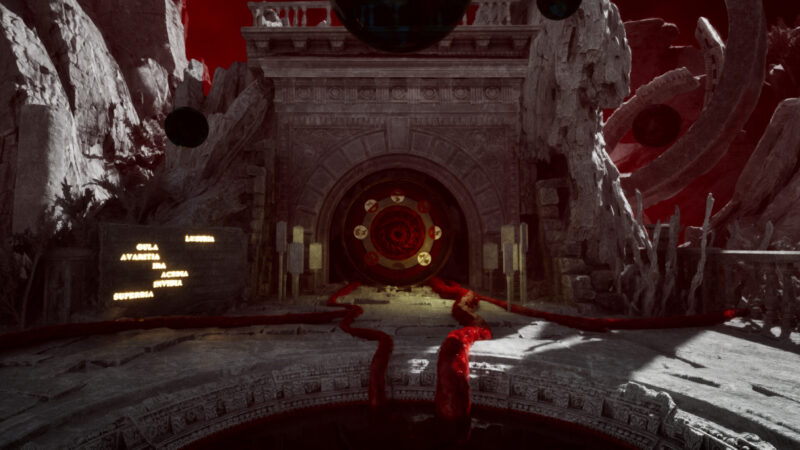
When Gabriele initiates The Dive, the aesthetic shifts but does not abandon restraint. Instead of defaulting to the familiar fire-and-brimstone imagery that has dominated depictions of Hell for centuries, the game presents something more subdued and abstract. The infernal landscape appears sculpted rather than explosive, for example, in monochromatic shades blended with startling crimson. This is overall unsettling through distortion and spatial ambiguity instead of overt grotesquery.
Early glimpses suggest an underworld shaped less by theology and more by psychology. This is consistent with the developers’ stated focus on environmental storytelling and dual-reality exploration. Hell, here, is implied to be internalized.
This approach is the game’s strongest conceptual asset. A personalized Hell may offer room for symbolic design, architectural metaphors, and environments that reflect memory and trauma rather than static “circles of punishment.” In theory, this framework could distinguish Dante’s Bloodline from other walking simulators that rely primarily on familiar horror tropes.
However, the demo does not yet fully realize that potential. Mechanically, interaction is sparse. Objectives largely consist of locating keys or activating objects, with minimal puzzle complexity on display. The genre does not demand combat or dense systems, but it does require meaningful engagement with space. At present, traversal often feels procedural rather than revelatory. The environments are strong visually, yet the act of moving through them lacks depth.
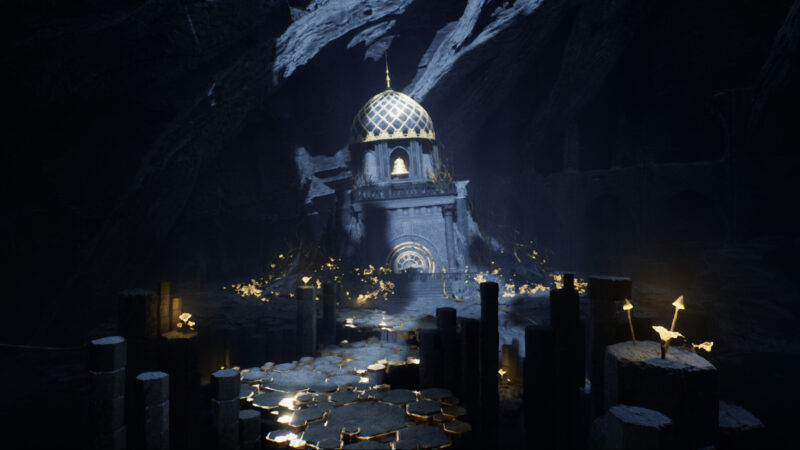
Narrative delivery presents additional issues. Voice acting is competent but uneven, and tonal inconsistencies in dialogue disrupt immersion. Moments that should carry psychological weight are occasionally undercut by lines that feel casual or misplaced. In a game positioned as introspective and atmospheric, this tonal misalignment is certainly not trivial.
Technical blemishes also intrude. Reports from early previews and hands-on impressions have noted visual artifacting and minor graphical inconsistencies. In a fast-paced title these issues might fade into the background, but in a walking simulator, during which players spend extended periods studying surfaces, edges, and lighting transitions, such imperfections become more noticeable.
Notably, the developers have positioned this project explicitly as an interpretation rather than a faithful retelling of The Divine Comedy. The Inferno of Dante’s Bloodline is not arranged into strict poetic circles, but rather, shaped by the protagonist’s psyche. That distinction is important. The game is not attempting to recreate medieval cosmology so much as reinterpret it through modern psychological horror.
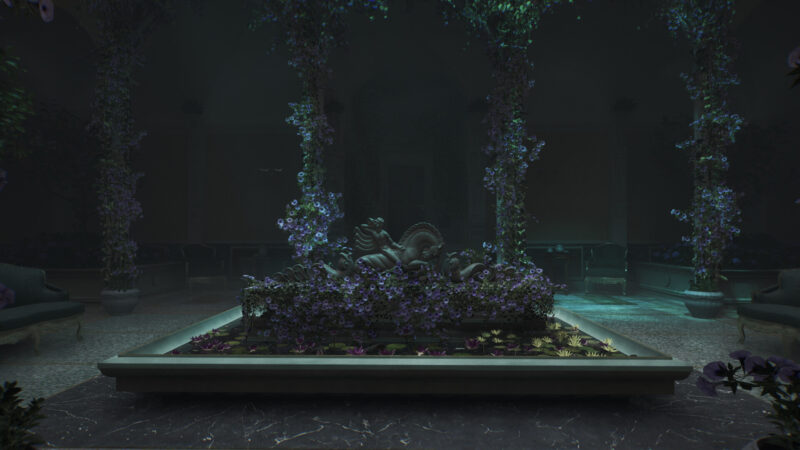
But the ambition and execution remain unevenly aligned. The art direction shows confidence and the manor sequences demonstrate careful environmental control. The depiction of Hell avoids cliché and suggests a willingness to experiment visually. These elements indicate a clear aesthetic vision. At the same time, unfortunately, the writing lacks consistency, the mechanics feel underdeveloped in the demo’s current state, and technical issues interrupt immersion. What exists is not an outright failed concept, but an incomplete one.
As it stands, The Alighieri Circle: Dante’s Bloodline presents a promising visual framework anchored in psychological reinterpretation. Whether it can translate that framework into a cohesive and disciplined full experience remains uncertain.
The artistic foundation is visible, however, the question is whether the final descent into Hell will deepen that foundation, or simply gesture toward it later this year when the full release is available for players to experience the spectacle for themselves.