

[Click here for Part One]
Fujimoto Takeshi
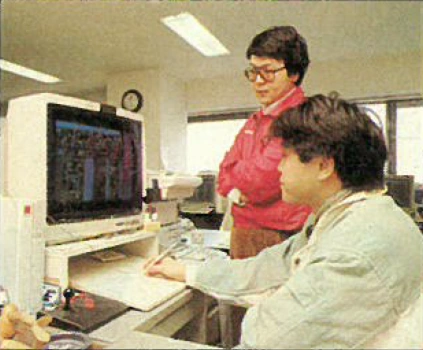
Fujimoto Takeshi joined Konami sometime in the late 80s, and his first official credit is working on bug checking for 1988’s Mad City. Castlevania was his first credit as an artist, working on Characters; in the following year, he worked on graphics for Snake’s Revenge and characters for Ganbare Goemon in 1991.
Sometime in the nineties, after working on graphic design for the Biker Mice from Mars game, he moved to Squaresoft and was graphics lead for Brave Fencer Musashi in 1998. Then he worked on backgrounds for Parasite Eve and background textures for Final Fantasy XI. Building on his experience across many of Square’s most famous titles, he would eventually work as art director for Kingdom Hearts: Birth by Sleep, and was Art Director focused on Maps for the Kingdom Hearts 1.5 remix collection. His last known credit is from 2013.
Ogawa Koichi
Though he’s not credited for it on English sites like Mobygames, Japanese sites say Ogawa Koichi was involved in the development of the first Castlevania as a character designer. His career began in the late 80s, working on characters for Mission Impossible and The Legend of the Mystical Ninja. He became a game planner in 1993, working on Ganbare Goemon 2, and worked on planning and script writing for 3.
After working on three games in the Goemon series, Ogawa would leave Konami in the mid-nineties and head to Squaresoft. Like Fujimoto, he also worked on Brave Fencer Musashi as a planner, scenario writer, and character designer. He planned dungeon maps for Final Fantasy IX before leaving Square in 2010. He may have returned sometime in the late 2010s, as he’s credited on Japanese Wikipedia as the chief planner for Dragon Quest XI. Mobygames puts him at Atlus in the early 2010s, working on the Nintendo DS Shin Megami Tensei‘s character designs.
He’s a big collector of toys and figures, as seen on his Twitter account, where he often posts his collection, including Castlevania statues and merch.
 Yamashita Kinuyo & Terashima Rie

The music of the original Castlevania came from the work of a young woman who had just begun her music career: Yamashita Kinuyo. Born on December 31, 1965, in Amagasaki, in the Hyogo prefecture of Japan. Music wasn’t a major part of her life, though she did study piano from the age of four and performed at recitals. She was also a volleyball player, something her piano teacher didn’t like due to the threat to her fingers. Math was her favorite subject in school.
As a kid, she’d never played video games. Her music experience centered on J-Pop and what played on television. The piano in her house was next to the TV, and she would play along with music that played on it. She played in competitions and for school festivals. Whenever there was ‘something related to music’ in school, she was asked to assist.
During high school, she wanted to be a math teacher or a medical technician, which meant studying at a science college, but she almost missed her chance due to the classes she took – she was missing Math III. A lucky break saw her attending Osaka Electro Communication University, where she studied electronic engineering; having missed Math III, she was playing catch-up from the beginning.
When she graduated, she had a hard time finding work in her field – she wanted to do hardware design for musical instruments, but back then it was still rare work for a woman. A job consultation office recommended she look into Konami, as they were looking for someone for their music department. She had no idea what Konami was, but decided to give it a shot since it was musical. The entrance exam was terribly difficult; Yamashita remembers there being four stages to it, but she finally got the job after passing them all. She joined the acoustic effect research lab, and her first assignment was Akumajou Dracula for the Famicom, the very first Castlevania.
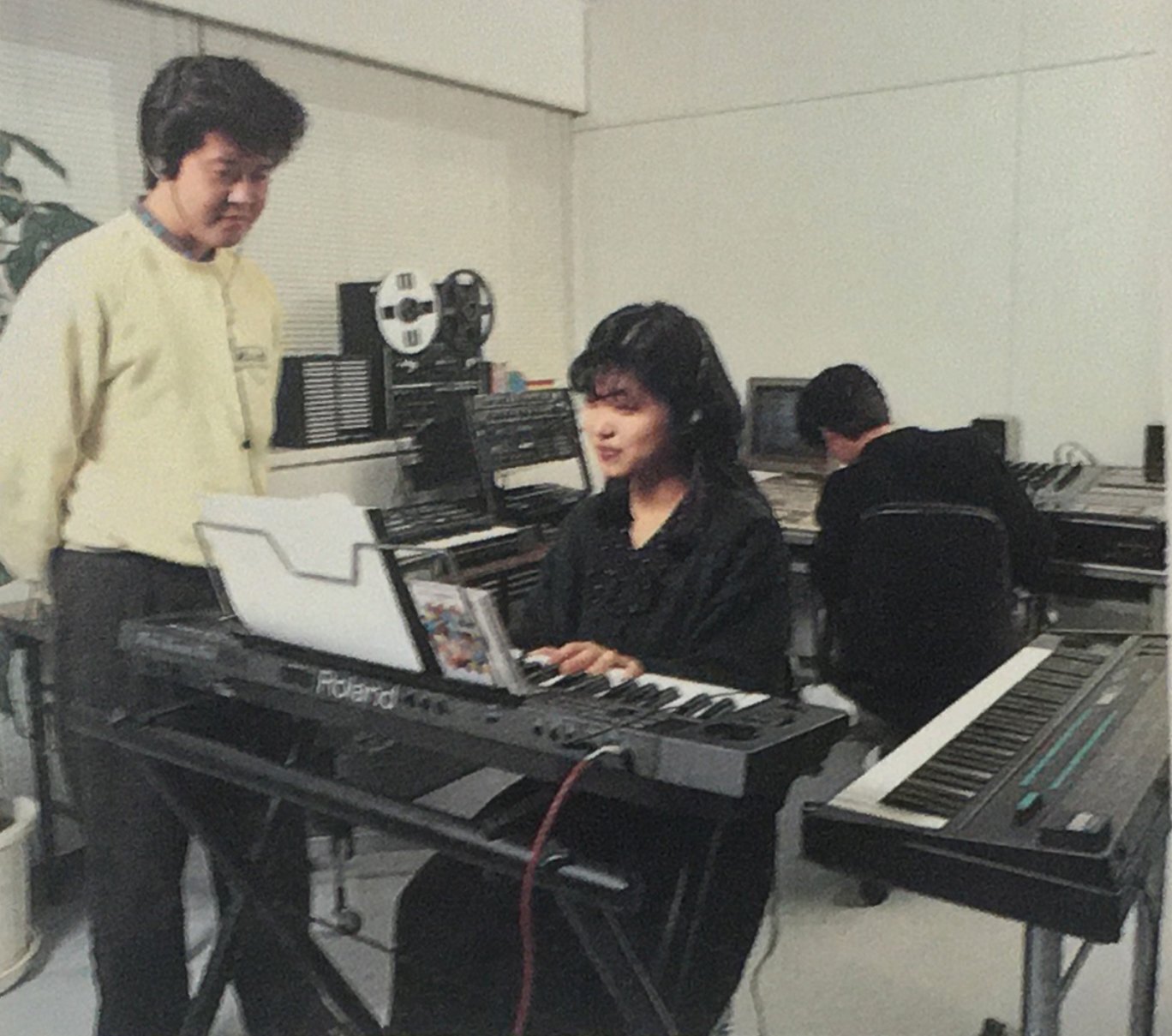
It was her first experience with composing. At Konami, she not only composed and implemented music, but she also did the data conversion, sound effects, and even created sound programs for games. For Castlevania, Yamashita would play the synthesizer for her boss, and if he gave the okay, she would then write the score and, at the same time, put the data into the computer. 8-bit music had to be programmed, not played by an instrument, and could only use four sounds at a time. There was no real ‘plan’ to the music; the melodies came from her head, and she played them on the fly.
When composing, she considers the ‘image’ of the game and the ‘pace’ of its gameplay, and if she’s actually given imagery of the game in progress, she tries to expand her ideas even further. For Castlevania, she had the chance to ‘demo’ the game while it was in development, and she drew on the ‘dynamism’ of the player’s movement and the ‘gothic’ imagery of the game for her inspiration. Gradually, she composed what she felt was ‘fitting’ for the game, something complementary to it.
It was a hard learning curve; the musical data was in hexadecimal, and since Yamashita was fond of math, she tried various programming processes to improve the sound. Programming on various consoles was different, because each had its own restrictions and limitations, but the actual musical process was mostly the same. Yamashita found the MSX was more difficult to work on than the Famicom, because you had to use fewer notes, and it was more of a challenge to make good music with less.
After working on the first game in the series, Yamashita was eager to continue working on the next, but her superior moved her off of Castlevania II, which instead went to Matsubara Kenichi. She worked on other games, like the RPG Esper Dream, which was composed by Yamashita while she did not know the game’s genre. She handled the entire sound production process alone, composing, creating sound effects, programming, and implementing the sound. It was ‘very hard work’, but something Yamashita was very proud of. The game’s soundtrack would receive a CD release, something Konami did not inform Yamashita of, which led to some ‘complex’ feelings on the part of the artist, though she did feel ‘pleasant surprise’ to find her music was on a CD and went out to buy it.
She worked on games like Majo Densetsu II, The Treasure of Usas, Arumana no Kiseki, and King’s Valley II, which was her final project at Konami. Another of her later projects included the sound effect conversions for Snatcher on the MSX in 1988.
At that time, Konami only had a handful of composers for games. Yamashita describes working long hours, composing for games quickly and moving from one project to the next with great speed. All told, she remained at Konami for two and a half years before the overwork and long hours made her ill. She also wasn’t happy with the lack of credit for her work. Her pseudonym, James Banana, was not her idea; she remembers the fake names being the creation of the programming team. James Banana is likely a reference to James Bernard, of Hammer Horror films fame.
She made the decision to go freelance in 1989; she was in new territory, and it was quite a struggle. Contract work wasn’t guaranteed and paid very little. But thanks to connections she made at Konami, and the assistance of friends and friends of friends, she started to build a freelance career, while living with her parents and working part-time at a cafe. In 1990, she worked with Taito, creating the music for Power Blazer. In the early 90s, she did music as part of a duo called Honey Honey, covering R&B and jazz music. She played piano, sax, and did background vocals.
Personal health issues and the Great Hanshin earthquake that hit her region in 1995 led to a dry period for her work. She suffered a brain hemorrhage in 1998, which nearly ended her life; her survival and recovery taught her the valuable lesson that tomorrow is not guaranteed.
She returned to game music with the Medarot or Medabots series, creating the soundtracks for five games in the series, as well as working on QA for the audio, making sure all the sound effects and musical elements were in their proper places. The series is one of her biggest projects to date.
Yamashita was the biggest contributor to the music of the first Castlevania, but she was not the only one. Another female composer, Terashima Rie, would produce a few songs for the game. According to Yamashita, Terashima composed the songs for Stages 1, 2, and 6, as well as the Ending; while Yamashita composed Stages 3, 4, 5, the Boss theme, and both Dracula themes.
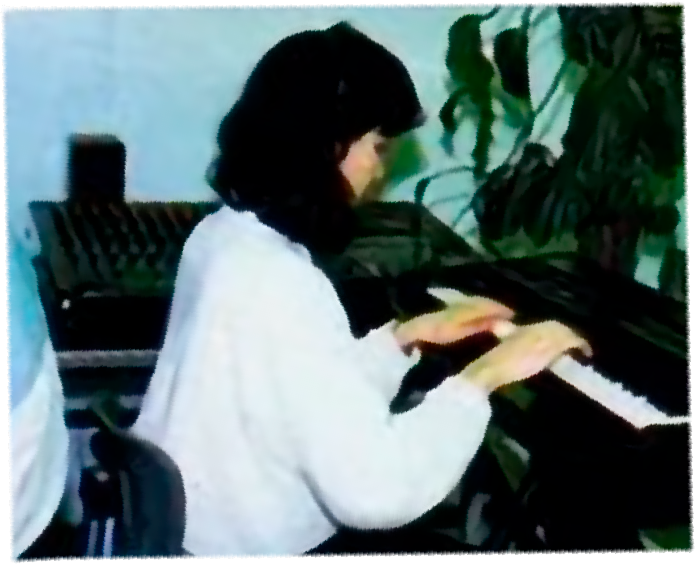
We know very little about Terashima compared to Yamashita; even her name is somewhat uncertain, as the reading of her first name is debated and it’s possible that she has married and changed her surname. She briefly talks about her work in a team interview for The Goonies II, in which a female musician believed to be Terashima is pictured, and says ‘gloomy music’ is her speciality.
In 2010, Yamashita moved to the United States, to New Jersey to live with her husband, while continuing her freelance musical work for games. She’s appeared at some events over the years, including a few of the Video Games Live concerts, and conventions like Magfest in 2013.
Morimoto Yukie 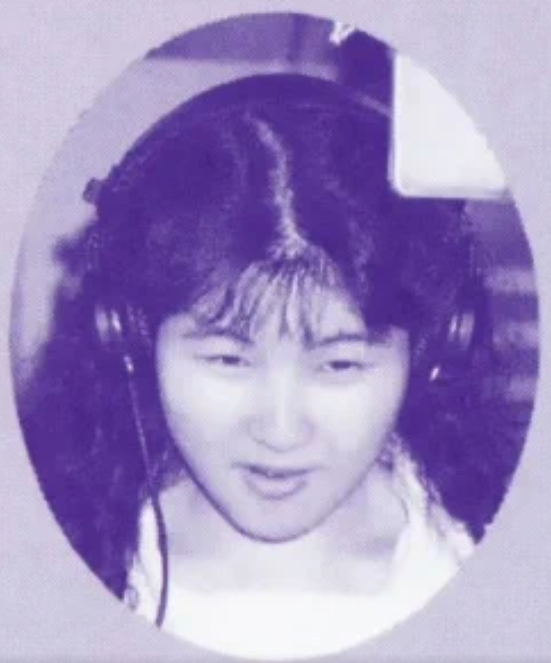
Another young woman working on Konami’s sound team was Morimoto Yukie, who started at Konami in 1988. She would be credited with working on the sound of Castlevania III alongside Sasaki Yoshinori, Funahashi Jun, and Maezawa Hidenori.
On Twitter/X, Japanese composer Takenouchi Yuji (better known as TECHNOuchi) credits Morimoto with influencing his career. He was struggling with the composition of his first song at Konami when Morimoto gave him ‘life-changing’ advice, without which he believes life might have turned out very differently.
Her trail runs cold in 1995, after spending years working on Gradius, TwinBee, Tiny Toon Adventures, and Ganbare Goemon.
Tom Dubois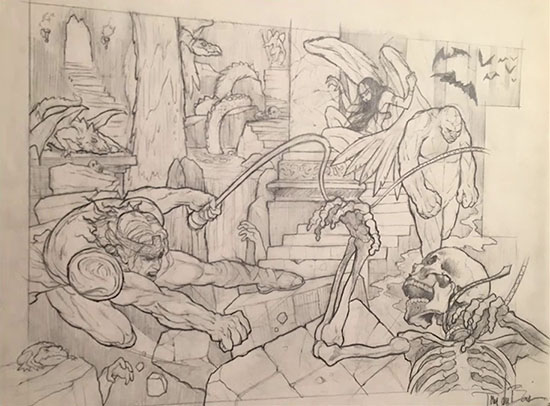
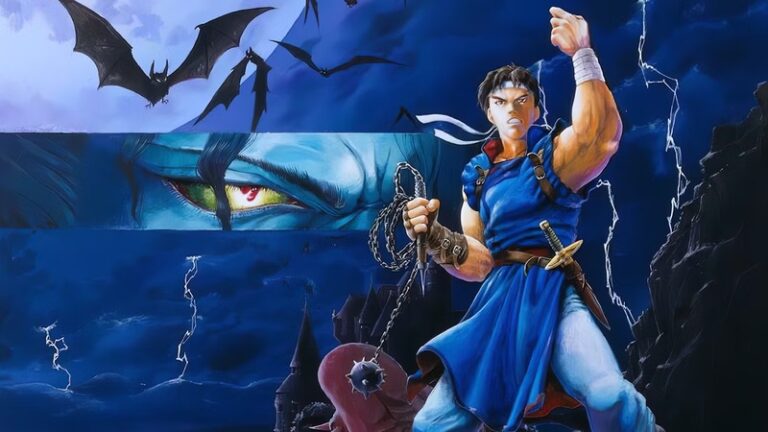
What about the covers of those early games? Fans have wondered who the artist was for years; online researcher VGDensetsu found Tom Dubois and archived their Castlevania works from their art portfolio. You can see variants of the covers as well as early sketches on VGDensetsu.
Other Team Members
Many of the people who worked on these early games have little to no information available about them, and even a deeper dive into the web has given me little to go on, or else the information is somehow suspect. These are the people for whom there is almost nothing to find.
The sound effects of the early games are in part the work of Uehara Kazuhiko. Born in 1963, he joined Konami in 1986 and assisted in the development of Konami’s Sound Creative Chip, a waveform sound source and memory bank used in Konami games. His first game credit is creating the sound effects for Castlevania and Vampire Killer. Later, he became an executive producer on the Power Pro series and served as senior VP for KDEJ. In 2014, he became Deputy General Manager of Konami’s 3rd Division; his next role was Executive Officer, President & CEO of Konami Business Expert Co., until 2021, when he was named Managing Executive Officer. Since his rise to the higher echelons, his name has disappeared from gaming credits.
 Murata Kouji worked on the music for Simon’s Quest, one of his earliest works, though he doesn’t mention it on his own website, which may mean his contribution was small. He graduated from Kinki University in 1982, and his career began at Tose, before transferring to Konami in 1987, where he worked on Snatcher, Bionic Commando, Bases Loaded, Top Gun, and plenty of others. Early on, he worked on some tracks for a game called Armana’s Miracle, but most of his work was rejected in favor of ‘Yamashita’, according to his website, likely referring to Yamashita Kinuyo. He wasn’t too upset by it because he’d been a fan of her work.
He left Konami to work freelance in the 90s, then joined Mizuguchi Engineering. In April of 2010, he went freelance again, and in 2011, helped found BitGroove. Today, he’s more involved in project management, with his last known credit being Kingdom Hearts Unchained for Android in 2016. He lives in Kyoto, is married with children and grandchildren, is still working at BitGroove, and has spent more than thirty years in the games industry.
Oka Toshinari worked as an assistant programmer on Vampire Killer, possibly as one of his first titles. He is also credited on Rock’n Rage, Nemesis 2, Knightmare II, King’s Valley II, SD Snatcher, Metal Gear 2, Parodius, and Chibi Maruko-chan. His name appears on a patent in 2002, so he was at least at Konami until then. More recently, he appeared in Spain in October of 2026 to speak on his history in game development. I really hope someone recorded that.

Shikama Hideaki has an extensive record of games in English, over fifty titles at Konami, starting with Vampire Killer. He was the game’s sound programmer and has worked on sound effects, video editing, and music for decades. He’s extensively involved in the DDR series. His credits end in 2012 with The Simpsons on Xbox 360.
Matsubara Kenichi was a composer working at Konami, who was involved in the Castlevania arcade game Haunted Castle. He is the composer of Bloody Tears from Simon’s Quest. After leaving Konami, he may have moved to Sony Computer Entertainment. Today, he is a lecturer at the Human Academy Music College.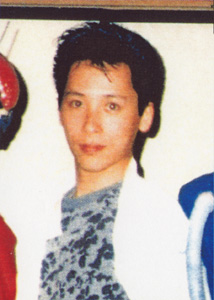
Matsui Naoki was a graphic designer on Vampire Killer, and remained at Konami until at least 1990, working as the development team leader for the PC port of Snatcher. He also formed Konami’s heavy metal band メタルスレイブ Jitsu, or Metal Slave, and was the lead vocalist. One source says he was once Kojima Hideo’s benefactor, implying he helped the man early in his career.
Some team members still haven’t been fully confirmed, but a few clues have led to possible identities for them. Two of these mystery teammates are A. Harima, credited as a programmer on Vampire Killer, and F. Hayakawa, credited for artwork on Vampire Killer.
A programmer named Harima Takahide worked at Konami in the 80s, programming for Billiards and Frogger in 1981 and Time Pilot in 1982. If he is also the Harima who worked on Vampire Killer, that would add Atheltic Land in 1983 to his portfolio. Afterwards, he seems to disappear. What little we know of him comes from a single interview with Inoue Masahiro. Harima’s experience working on Billiards, where the cue ball would bounce around in all directions, was the inspiration for Time Pilot, a game where countless bullets shot out from the center screen. Those bullets were VRAM, a technique that allowed a huge number of bullets to be on screen at once. Harima may also have been the one to include the idea of time travel, but Inoue isn’t sure.
F Hayakawa could be Hayakawa Naomi, but this is a much more tenuous connection. Hayakawa Naomi is credited with lineart for Tokimeki Memorial in 2009, but there’s a large gap in her resume and no certainty she was employed at Konami in the 80s.
 Another mystery is H. Eda, but I’m fairly convinced I know who he is – Ueda Hideo. Ueda’s history goes back to 1987, credited as H. Ueda in Quarth, Blades of Steel, and Parodius. H. Eda is credited with assistant programming on Vampire Killer. The name H. Eda appears on games programmed on the NES and MSX, while H. Ueda appears on the Game Boy. It’s possible the different consoles had restrictions that allowed for more or less space for the names, or maybe I’m overthinking it.
If H. Eda is Ueda Hideo, that would make him one of the few to work on both the original titles and later games in the 90s; he was the director of Castlevania Chronicles, and received a special thanks for Rondo of Blood.
There are so many more developers we don’t know anything about, and so many more we need to find. It is a terrible shame that these people did not receive their due when the games were released, but at least we can try to honor and credit them today.