
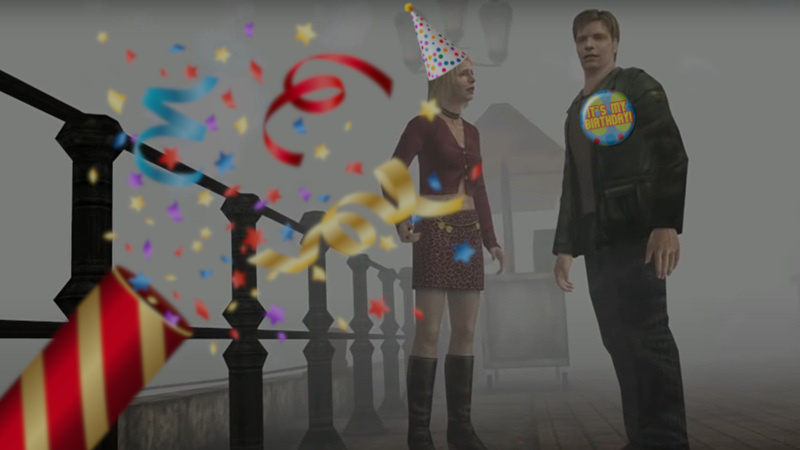
Silent Hill 2 celebrates its 25th anniversary today, and we’re still talking about it all these years later. It’s perhaps not an exaggeration to say that survival horror hasn’t really been the same since. In fact, the entire series has etched itself into the annals of gaming history, offering scares that are more psychological, that get under your skin.
Classic Resident Evil may seem similar on a surface level by comparison, but its stance as something of an original at the time meant it was easy to draw comparisons between it and Silent Hill. Both offered third-person horror experiences with fixed camera angles (mostly), puzzle solving, large bouts of exploration, and enemies to fight. But there the similarities ended.
The former was a celebration of B-movie zombie flicks, with oodles of juicy cover-ups, secret labs, hulking biohazard monsters, and a smattering of campy dialogue. The latter encased everything in an oppressive fog (literally) and a darkness that latches onto the human psyche.
The 2001 sequel only upped that, so let’s take a look at the ways Silent Hill 2‘s legacy endures to this day.
It Wasn’t the First of Its Kind
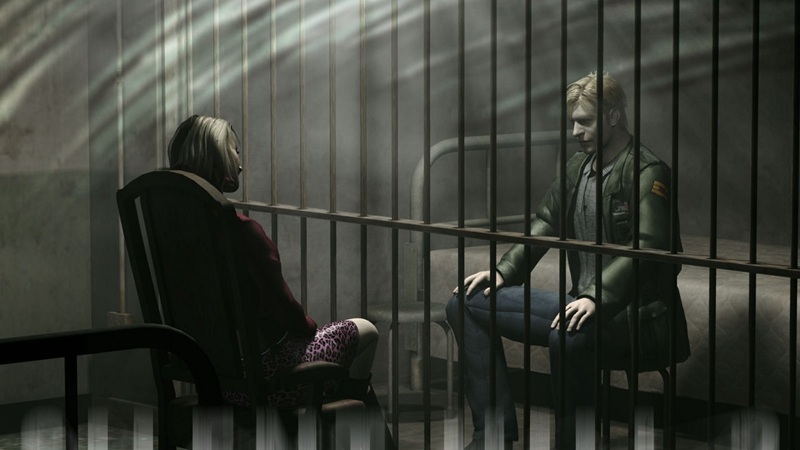
Although Resident Evil (1996) is often credited as being the progenitor of survival horror, the genre existed long before it came onto the scene. Some would argue 1992’s Alone in the Dark is where it all began, but it actually goes back further. This IGN article from 2008 – along with gaming scholar Bernard Perron – traces it to 1981’s Haunted House. That’s fifteen years before RE.
But this isn’t about the history of survival horror or which game started it. The point here is that Silent Hill didn’t need to invent an entire genre to become an iconic addition to a rising video game landscape. The framework was already there; it merely did something different with it.
Perhaps, then, it’s not surprising that by the time Silent Hill 2 came out (just two years after the original), we were already seeing how games could unsettle people beyond going “boo.” That’s not to say subtle scares didn’t exist beforehand, but the genre was still finding its feet at that time. Capcom may have popularised horror in gaming, but Konami and Team Silent were taking it to much darker, unnerving depths.
The Art That Inspired It
Perhaps one of the game’s most striking features is its haunting imagery. The aforementioned fog – initially a means of compensating for slow rendering on primitive hardware – is probably the one visual that fans associate Silent Hill with. But that grey, eerie haze is just one aspect that makes it stand out.
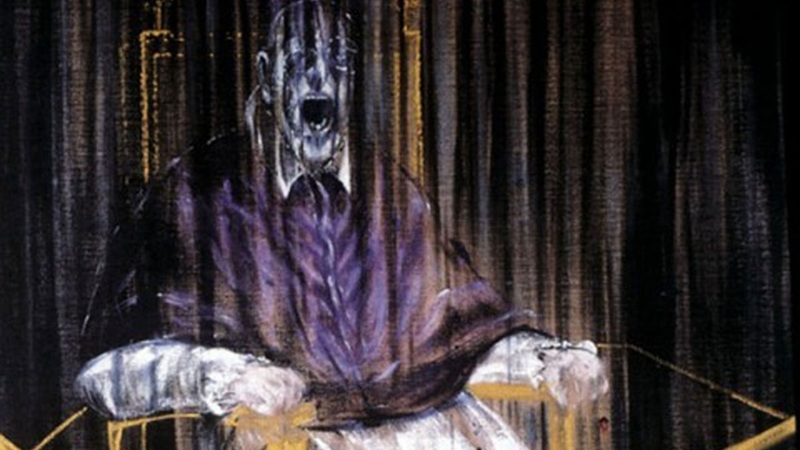
Artists such as Irish-born Francis Bacon played a part in shaping the overall look of SH2. Bacon’s horror artwork explored themes of human form, abstract figures, and religious iconography, such that they would not find themselves out of place in the second game.
For an example, look at his 1962 painting Turning Figure. Is that not something you could see coming at James Sunderland down a dark corridor?
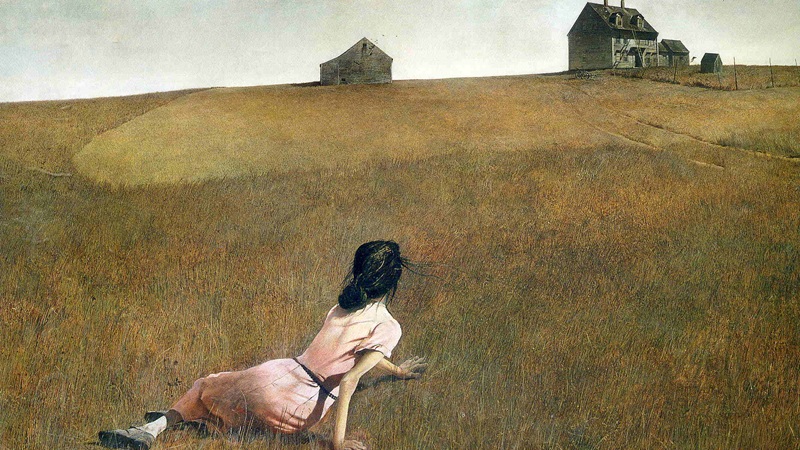
Then there’s American artist Andrew Wyeth, who’s 1948 work Christina’s World could easily have inspired the in-game painting that depicts Toluca prison.
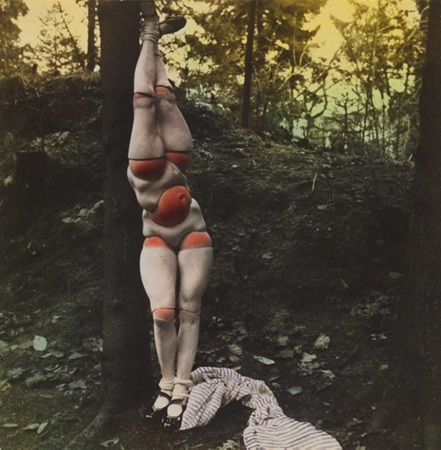
If you still need further proof of how art inspired Silent Hill 2, take a look at Hans Bellmer’s The Doll (“La Poupée”) series from the 1930s. Tell me it doesn’t remind you of the mannequin monsters from the game.
This isn’t based on a textual reading or fan theories, either. In a 2001 interview with IGN, the game’s CGI director, Takayoshi Sato, said Bacon, Wyeth, and Rembrandt were key influences. They even referenced the films of Alfred Hitchcock and David Lynch as having an impact on the art style. It’s not hard to see how all these helped inspire the look and feel of SH2.
A Masterclass in Psychological Horror
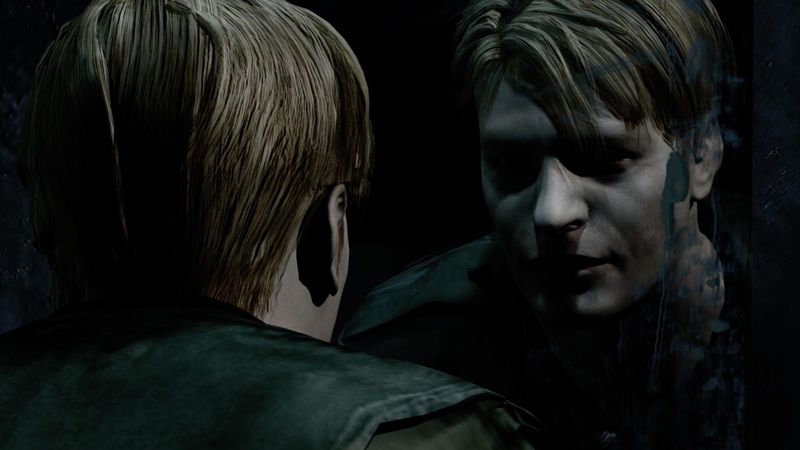
Silent Hill 2 has depth, something that wasn’t as prevalent in the first game and is unmatched in subsequent releases. At a time when horror gaming was becoming mainstream, there was something to be said about going beyond surface-level scares.
James Sunderland is not a capable protagonist fighting evil monsters in the dark. He’s a psychologically damaged human being whose very traumas become manifest. All his greatest fears and anxieties are a terrifying reminder of who he is and what he’s done.
At the start, it seems simple enough; a hero’s journey to find his wife. Even with the understanding that Mary’s been dead for three years, it’s easy to jump into that narrative as a player. But as the story progresses, the complexity of James’ psyche becomes more apparent.
That everything he encounters is a representation of his own mind state is a testament to the game as a unique horror experience. While emotionally bleak games had existed beforehand, such as 1995’s I Have No Mouth, and I Must Scream, Silent Hill 2 feels instantly more personal (as noted by the comments on this old Reddit post). In short: the game is terrifying, but on a more emotionally cerebral level that addresses themes of guilt, grief, and human suffering.
The Enduring Legacy
There’s a reason Silent Hill 2 often tops lists of the greatest horror games of all time. If it’s not at the number one spot (often coming just behind Resident Evil 4), it’s at least sitting comfortably in second place.
ScreenRant calls it one of the most influential horror games ever. Games Radar+ puts it at number five of the greatest PlayStation 2 games. Given that there were estimated to be more than 4,300 PS2 titles released in the console’s lifetime, that’s some going.
Such renown has obviously impacted horror gaming on the whole. There are more than a few examples of games that were, if not directly, at least indirectly inspired by SH2. The likes of Alan Wake, Evil Within, Fatal Frame, and Signalis are often brought up in conversation.
Similarly, Bloober Team’s The Medium likely takes several cues from the world of Silent Hill. The developer was even given the unenviable task of creating the 2024 remake. Since releasing, said remake has gone down a triumph, becoming one of the highest-selling entries in the series. That may speak to how accessible gaming is these days compared to 25 years ago, as well as Bloober’s reputation.
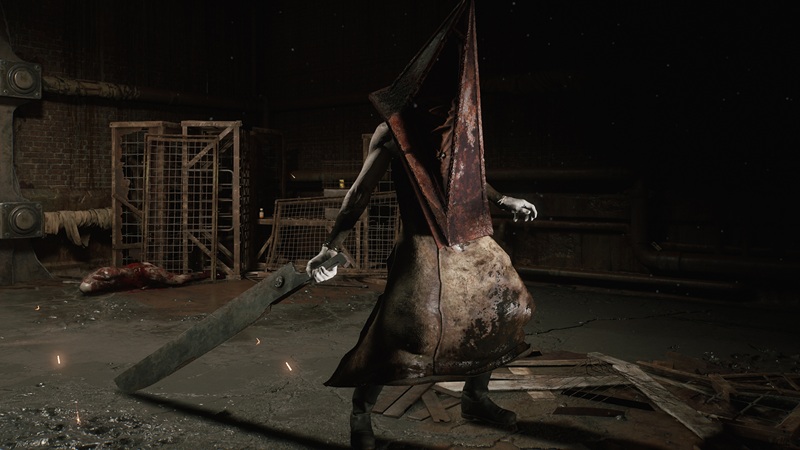
However, it also speaks of the legacy the 2001 release of Silent Hill 2 left behind. The darkly atmospheric presence of the town itself, the personal and psychologically rich story centred around a flawed protagonist, the feeling of paranoia and powerlessness in the face of abject terror, our first sighting of Pyramid Head, Akira Yamaoka’s haunting soundtrack…it all works together.
These (and more) are why it’s such a beloved game. It expertly built from what came before, taking it to new feats of terror. It’s not a run-and-gun horror game with obvious closure at the end. It’s a descent into mental anguish, with a story that tortures us a quarter of a century later.