
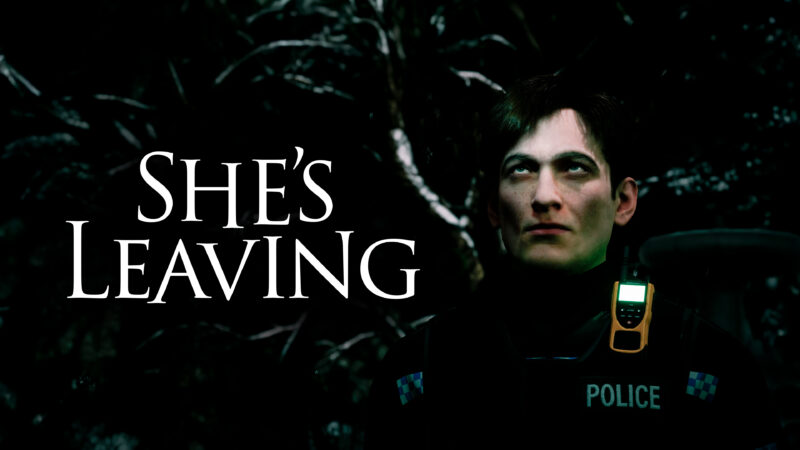
At a time when survival horror keeps recycling the same beats, such as cloaked monsters, damp corridors, and predictable jump scares, She’s Leaving stands out because it doesn’t lean on cheap thrills.
Blue Hat Studio’s “forensic horror” thriller isn’t perfect, and it doesn’t reinvent the wheel, but it earns its tension through atmosphere, intent, and a willingness to let investigation carry the weight of fear. The result is a compact, focused experience that feels like a thoughtful indie game rather than a budget knock‑off of bigger names.
Premise
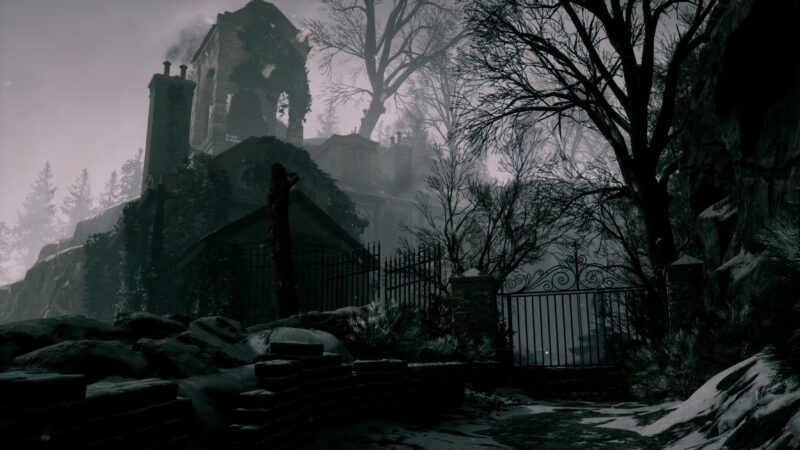
You play as Charles Dalton, a forensic analyst specializing in blood‑spatter examination, sent to the snowy outskirts of Haywood to investigate a series of disappearances connected to a possible serial killer. For most of the game, you’re confined to House Haywood, a Tudor mansion whose dimly lit hallways and fog‑soaked docks ooze isolation and unease. There are no grotesque beasts here, but rather just the slow, suffocating pressure of a case that seems intent on consuming you.
Forensic Gameplay
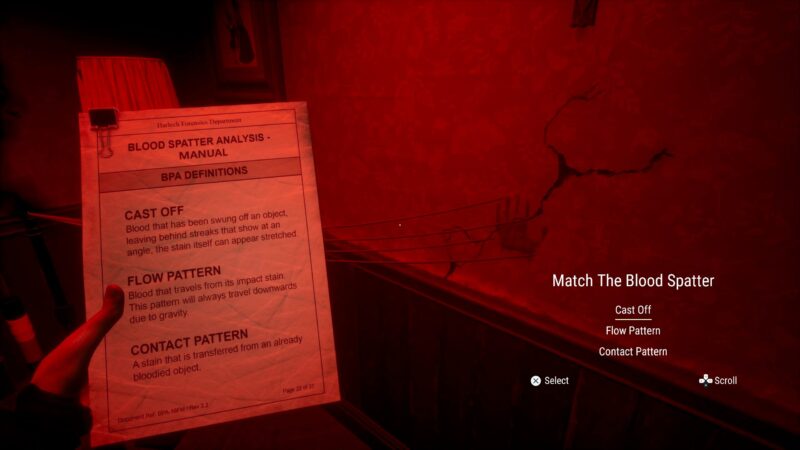
She’s Leaving started out interesting with its forensic gameplay. Instead of puzzle part fetch quests or weapon upgrades, Charles is tasked with locating blood splatters, analyzing them with UV light, and identifying their origins. At its best, this mechanic feels like an homage to real‑world detective work, forcing you to slow down, think, and look consciously for meaning in evidence rather than relying on instinct alone. The premise is somewhat novel and, in a genre saturated with endless tropes, a refreshing take.
But the mechanic doesn’t quite sustain its promise. By the mid‑game, the analysis becomes routine. Most splatters are visually signposted, and the classification options rarely force you to puzzle out anything truly complex. Missteps result in minor penalties like temporary “brain fog,” slowing your movement, but they rarely feel consequential. Once you’ve done a few dozen analyses, it becomes clear that the system has limits, clever in concept, but shallow in execution.
That being said, She’s Leaving doesn’t rely solely on blood splatter. The environment itself does much of the heavy lifting. House Haywood is a brilliant setting that feels purposefully edited to hide details in shadow. There are old wood panels that creak under your breath, and distant ambient noise that suggests presence even when none is visible. The claustrophobia here is subtle, working through implication as a hallmark of psychological horror done right.
Atmosphere and Design
Darkness and silence are constant companions. The audio design, from the creaking floorboards to whispered gibberish emanating from the unseen killer, often builds tension more effectively than any scripted scare. In fact, the game’s antagonist, a hulking serial killer with a murky presence, walks the line between threat and atmospheric beat more often than outright predator. His footsteps, his grunts, and his unnerving proximity all make you feel pursued, but rarely panicked.
And yet that discomfort is double‑edged. Over time, the lack of variety in threat encounters becomes noticeable. The killer appears intermittently, and while his presence is unsettling at first, repetition dulls the edge. Without more nuanced behavior or evolving mechanics, what seemed terrifying in early scenes eventually felt like routine hazard. Combined with puzzles involving keys, that at times do lean toward fetch‑and‑unlock design, there are stretches where the tension dissipates and you’re left with repetitive tasks in place of escalating dread.

The story itself — a missing‑person case entwined with personal stakes and dark secrets — is engaging enough to keep you invested, but it never quite reaches the emotional or intellectual depth it hints at early on. Narrative beats resolve predictably, and the pacing occasionally lags under its own quietness. Still, for a game of this scale, it was closer to engaging than forgettable.
Visually and technically, She’s Leaving lands where most indie horror games do, competent but uneven. The handcrafted environments of the mansion and docks are textured and atmospheric, yet character animations and interactions were stiff. Load times are generally reasonable, and the PS5 version takes advantage of DualSense features. This includes the killer’s whispers through the speaker and adaptive trigger feedback on the taser, which add a subtle layer of immersion. These touches amplify the game’s core intention of making you feel the weight of your investigation.
Conclusion
One of the game’s strengths is how it keeps its runtime reasonable, clocking in between four and six hours for most players, depending on how thoroughly you explore. That brevity works in its favor, as She’s Leaving never overstays its welcome. For horror players who prefer atmosphere and thoughtfulness over frantic action, this is a plus.
But ultimately, She’s Leaving is a quiet, thoughtful survival horror that marries forensic investigation with claustrophobic atmosphere. Its core ideas were better than its execution, but what it does well it does with care. It isn’t a genre‑defining title, but it’s a promising debut from Blue Hat Studio that respects horror traditions while trying to push the “detective” angle in a way I enjoyed.
If you go in expecting a blockbuster, you’ll be underwhelmed. But if you’re looking for a compact little horror game that prioritizes mood and mystery over jump scares and combat, She’s Leaving is worth your time. It isn’t perfect, but it fills a certain niche for indie horror.
 (7 / 10)
Good
(7 / 10)Rely on Horror Review Score Guide
A PS5 review copy was provided by the publisher.