

Unsealed: The Mare is an upcoming psychological horror game, which, according to its Steam page, offers a “dark and emotional story.” The game includes three different chapters, featuring different mechanics which intensify the overall challenge the player faces over time. We had the opportunity at Rely to interview Simon Andersson, lead at Gamhalla, and both publisher and developer behind this intriguing indie.
The game is slated for release on March 10 on PC via Steam. You can read on to understand Simon’s thought process behind the development of this next title in my personal favorite subgenre of horror gaming.
ROH: You’ve spoken about how your own experiences with sleep paralysis directly inspired Unsealed: The Mare. Can you walk us through a specific moment or sensation from those experiences that became foundational to the game’s sound design, environments, or central entity?
One of the most defining sensations from sleep paralysis for me is that pressurized feeling that something is in the room with you. Sometimes you see something in a corner, sometimes you only hear strange sounds, but there is this overwhelming sense that you are not alone. Even if it only lasts for seconds, it feels much longer. That mix of distorted time, subtle audio, and the feeling of being watched became foundational to the game’s sound design and the central entity. The idea of something that does not rush, that simply stands there and takes its time, influenced the atmosphere and the way encounters are designed.
ROH: Sleep paralysis exists in a fragile space between dreaming and waking. How did you translate that unsettling in-between state into interactive gameplay without losing its unpredictability?
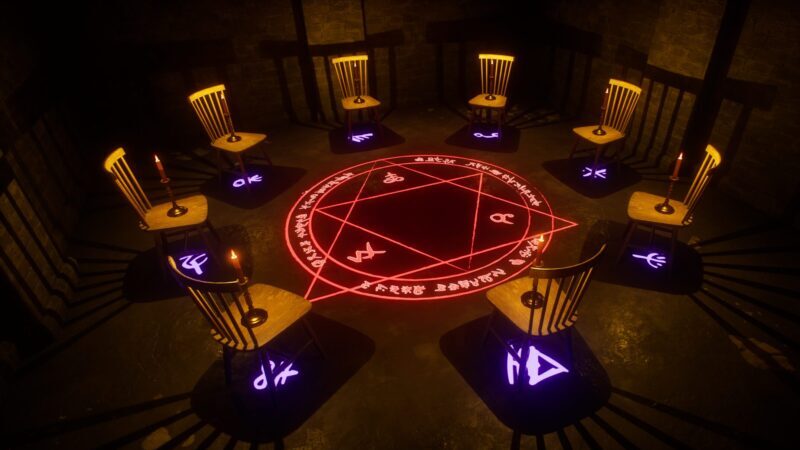
The game does not literally take place during sleep paralysis, but it builds on that fragile space between dreaming and waking. In dreams, what you remember or believe can influence what you experience, and you are not always certain how much control you truly have. I translated that into gameplay by letting memory actively affect the environment through Focus Memory. You might use it to progress, but you may also need to use it during encounters, while something is actively threatening you. That mix of memory, perception, and pressure is what recreates that unsettling in-between state in an interactive way.
ROH: The “Focus Memory” mechanic appears central to both gameplay and narrative. When did this idea first take shape, and how did it evolve throughout development?
It was actually one of the later things I added to the game. I wanted a mechanic that could give the player more control in certain situations while still keeping the tension and engagement high. At the same time, it naturally became a strong way to tell the story and build on the idea of influencing the dream through memory. Over time, it grew into something central to both the gameplay and the narrative. It connects progression, encounters, and the dream concept in a way that ties everything together.
ROH: How does Focus Memory seamlessly shift environments to continue the story, and what were the biggest design or technical challenges in making those transitions feel natural rather than jarring?
Focus Memory can open a new room, reveal a hidden path, reveal pieces of the lore, or even chain a door during an encounter to give you a few extra seconds to continue your objective. An important part of making that work was ensuring it felt like the player was actively causing the change, not like the world was randomly reacting on its own. One of the biggest challenges was making the mechanic feel satisfying and intuitive. It had to be clear when and where you could use it, without over-explaining it. Most of the work went into feedback, timing, and making the interaction feel deliberate rather than abrupt.
ROH: Horror often leans either into slow-burn dread or sharp jump scares. How did you balance prolonged tension with sudden shocks to create a dynamic experience?
Audio definitely plays a big role in this. In Unsealed: The Mare, it is a mix of slow dread and sharp jump scares. I think the key is to let the player believe they understand what is going to happen, and then change things slightly so it catches them off guard. For the slower dread, it is more about pressure and limited options. You are often not completely safe, even when nothing immediate is happening. That lingering feeling, combined with subtle audio cues, keeps the tension building so that when something sudden does happen, it feels stronger.
ROH: As a developer who has to replay sequences repeatedly, how do you effectively playtest jump scares and tension to ensure they remain frightening for players?
That is definitely one of the hardest parts as a developer, because after replaying something many times, it stops being scary to you. That is why playtesting has been so important. I have had numerous playtests with people from different backgrounds and with different levels of experience in both gaming and horror. Some scares affect certain players more than others, so it is important to observe reactions and adjust timing, audio, and buildup accordingly. Not every scare is fully scripted either, as some moments are more dynamic or can happen in slightly different ways, which helps keep them unpredictable for players.

ROH: Sound plays a major role in psychological horror. How did you approach audio design to capture the suffocating, immobile terror associated with sleep paralysis?
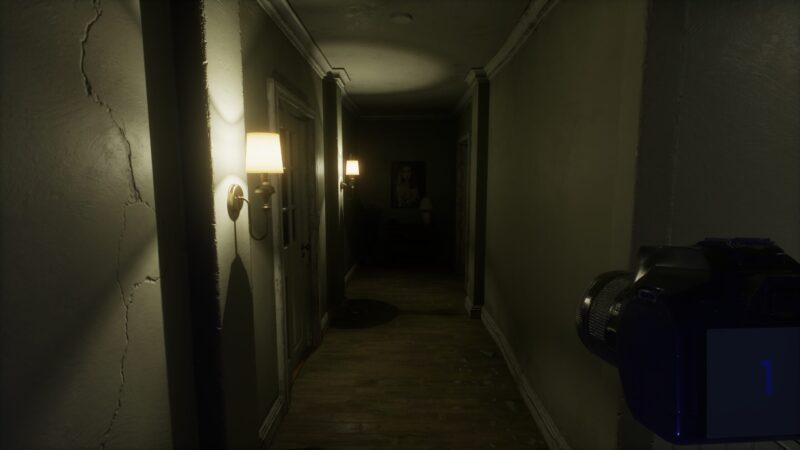
Audio has been a major focal point of the game and one of the most interesting parts to work on. A lot of it comes down to experimenting with pitch, reverb, distortion, and layering different sounds at specific volumes and timings to create a certain atmosphere. For the sleep paralysis influence, it is more about recreating that specific feeling you get when you are immobile. You feel helpless, like something else is in control. Time slows down, and if you see something in the room, it is just taking its time with you, in no rush. That feeling is what I tried to capture through the audio design.
ROH: Working as a solo developer in northern Sweden, where long and dark days are prevalent, how did your surroundings influence the tone and atmosphere of the game?
During the winter in northern Sweden, there are only a few hours of daylight, and often you spend those hours working, so you barely see the sun at all. The cold and the long periods of darkness naturally create a heavier atmosphere around you. When it is dark outside for most of the day, it affects your mood and the overall tone of what you are working on.
ROH: What drew you to the horror genre in the first place, and how does Unsealed: The Mare differentiate itself from other titles in the psychological horror space?
I have always loved horror games, and I feel like I have played most of what is out there. At some point, I wanted to create my own take on the genre. I wanted to make something that felt more intense and more challenging, where the player has to actively think and engage rather than just move forward. With Unsealed: The Mare, I wanted the story to require effort. You are given clues and pieces of information, but it is up to you to connect them and figure out what is really going on. I also wanted the player to have more agency, where awareness, decision-making, and strategy actually matter.
ROH: Looking back on development, what was the most challenging aspect of bringing such a personal and atmospheric project to life on your own?
The most challenging part was balancing everything while working alone. A lot of time went into playtesting, adjusting sections, tuning difficulty, and refining the audio feedback. Because the game relies heavily on atmosphere and sound, small changes can make a big difference. Making something intense and challenging while still giving the player enough room to understand what is happening and improve took a lot of iteration.
ROH: Were there any ideas or sequences that proved too intense or personal to include, or did leaning into discomfort become part of the creative process?
There were a few moments during development where I questioned whether certain scenes were too intense. In the end, I chose to keep them, but they required extra thought in how they were presented. Leaning into discomfort did become part of the creative process. Psychological horror is often about difficult emotions and unsettling situations, and I did not want to soften those moments too much. At the same time, it was important that they felt meaningful and connected to the story rather than being included purely for shock value.
ROH: When players reach the end of Unsealed: The Mare, what emotional or thematic takeaway do you hope lingers with them?
It does depend on how much of the story each player picks up along the way, but my hope is that players walk away still thinking about it. Even if they feel like they understand what happened, I want there to be lingering questions. Maybe they revisit certain moments in their mind and start wondering whether something earlier connects to something later. The story leaves room for interpretation, and I hope it lingers long enough for players to keep piecing it together, even after the game ends.
As always, you can look forward to a review from us for the game soon, and enjoy the new “Behind the Scenes” trailer below to take a gander at what is to come!