
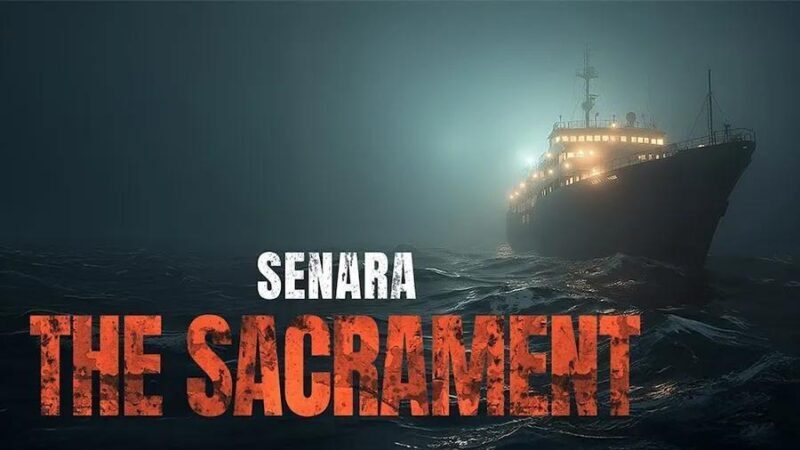
There’s a noticeable shift happening in survival horror right now as bigger budgets often mean louder games and more scripted scares. SENARA: The Sacrament is seemingly doing the opposite. It slows the pace down considerably and asks you, the player, to meet it on its terms. From my preview, this is a game built around isolation and uncertainty rather than spectacle. You wake up aboard a massive, abandoned ocean liner with no clear direction and very little guidance. There is no immediate chaos and no “cinematic hook” to pull you forward. There is just an environment that feels indifferent, and far larger than you expect.
SENARA recalls an older design philosophy of survival horror, where the tension builds gradually and where simply moving through the space ahead of you can feel like some progress.
Weighing a Real Place
What gives SENARA: The Sacrament much of its identity is the ship itself. Influsion Inc., the South Korean developer for the title, has recreated a real 6,000-ton vessel using LiDAR scanning and photogrammetry. That level of detail comes through in early footage and impressions.
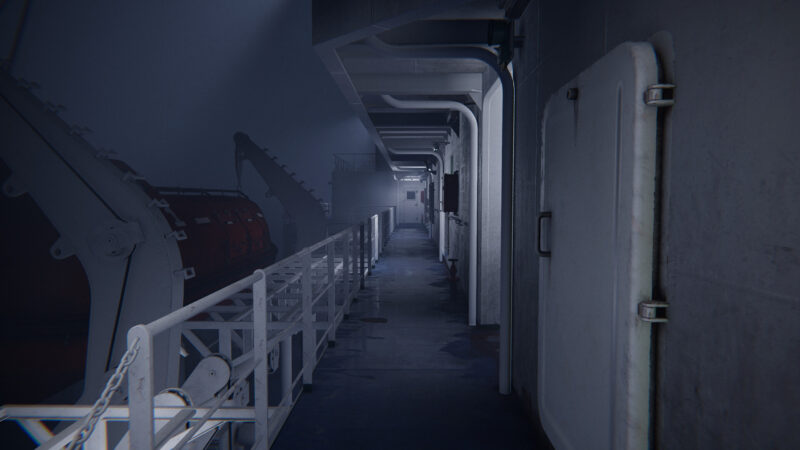
This is not a more stylized horror setting designed around jump scares. It feels like a real place first, and a game environment second. Hallways stretch longer than expected and rooms exist without any purpose beyond their real-world function. Navigation becomes part of the challenge because the ship does not guide you in the way most games do.
That design choice creates a unique kind of tension. You are not being led from one moment to the next. You are wandering, sometimes unsure if you are even heading in the right direction. For some players, that lack of structure will feel immersive, but for others, it may test their patience.
Slow Burn Horror Takes Risks
The pacing is where SENARA is likely to divide its audience.
The preview involves a deliberate experience that takes its time introducing threats. This game leans heavily on atmosphere, environmental storytelling, and a general discomfort of being alone in a space which consequently, feels wrong. Encounters are not constant, and there are long stretches where nothing overtly happens. That kind of restraint can be powerful when everything around it supports the tension. Notably though, audio design, subtle visual cues, and pacing all need to work together. If any one of those elements falls short, the experience can start to feel empty rather than suspenseful.
From my impression, the game suggests that while the overall visual fidelity is strong, the game has not fully matched that with equally effective sound design or escalation. This is something that can change before release, but it remains one of the biggest questions hanging over the project.
Exploration Over Action
Mechanically, SENARA stays close to survival horror roots. Exploration, puzzle-solving, and resource management form the core of the experience. Progression comes from paying attention, revisiting areas, and slowly piecing together what happened aboard the ship.
There is also a narrative layer centered on potential cult activity and fractured belief systems, but the “story” is not delivered in a straightforward way. Players uncover it through documents, environmental clues, and their own interpretation of events. Multiple endings are planned, which suggests that player choice and discovery will shape how the story concludes.
That structure reinforces the game’s overall philosophy: it is not trying to rush the player. It wants you to question what you are seeing, and to draw your own conclusions. The ambition behind SENARA: The Sacrament is clear, in that it aims to create a horror experience built on realism, scale, and psychological pressure rather than constant stimulation. However, that is not an easy balance to achieve.
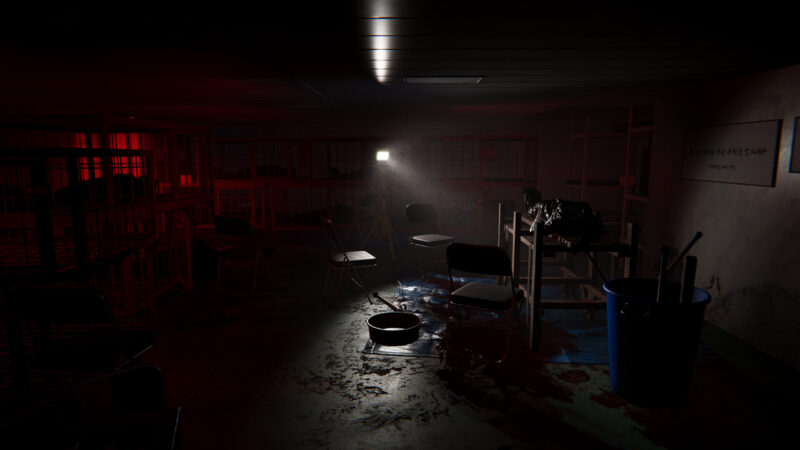
If the pacing tightens and the audio design evolves to match the visual detail, the game has the potential to stand out in a saturated genre. The concept of the ship alone is a strong foundation, and the commitment to letting players explore it without heavy guidance is refreshing.
At the same time, this approach leaves very little room for error. A slow game without strong tension can feel uneventful. A realistic space without meaningful interaction can feel empty. The line between immersive and tedious is thin, and SENARA walks it for most of its runtime.
Conclusion
Right now, SENARA feels like a project with a clear vision and a willingness to take risks that many modern horror games avoid. It does not rely on constant scares or cinematic pacing. It asks for the player’s attention and a willingness to engage with its world on a deeper level. Whether that vision fully comes together will depend on execution. I will say, the idea as a whole is compelling (and it did make me wonder about other horror games taking place on boats) but as an indie title, the final experience for players will come down to how well all those moving pieces are refined before release.
For players looking for something heavier, and more methodical, SENARA: The Sacrament is one to keep on your radar. The game has a TBD release date on PC via Steam.